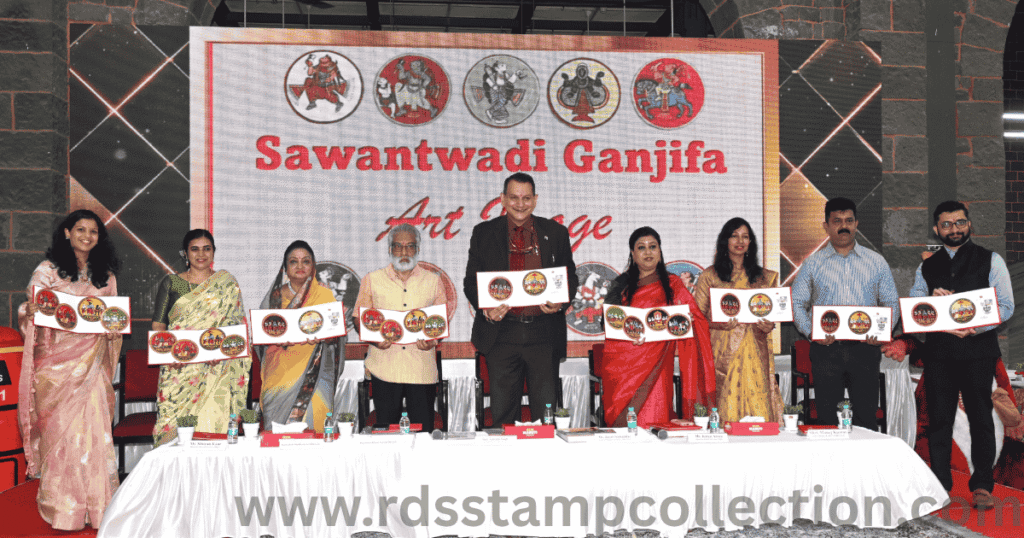
India Post added another gem to its cultural collection this year. On Philately Day 2025, the Maharashtra Postal Circle released a stunning set of Ganjifa Postcards at the Mumbai GPO Heritage Building. Each postcard celebrates India’s traditional Sawantwadi Ganjifa art, beautifully illustrating the Dashavatara – the Ten Incarnations of Lord Vishnu.
It was more than just a philatelic release. It was a moment of pride – a tribute to India’s forgotten art.
Background
Ganjifa is one of India’s oldest art forms. The word comes from the Persian word “Ganjifeh,” meaning “playing cards.” But these weren’t ordinary cards. They were miniature paintings – hand-crafted, colorful, and full of stories.
Ganjifa cards date back to ancient India, possibly the 6th or 7th century. They became very popular during the Mughal era and were later adapted by Hindu artists, especially in Maharashtra, Odisha, and Mysore.
Each set was hand-painted with natural dyes and coated with lacquer. Themes ranged from royal life to Hindu mythology, especially the ten avatars of Vishnu – known as the Dashavatara. Every card reflected faith, culture, and fine craftsmanship.
Event Highlights
📮 Event: Philately Day 2025 (08.10.2025)
🏛️ Venue: Mumbai GPO Heritage Building
🎨 Release: 10 Picture Postcards on “Sawantwadi Ganjifa Cards” with 1 special pictorial cancellation
Chief Guest:
Shri Amitabh Singh, Chief Postmaster General, Maharashtra Circle. He spoke about India Post’s mission to preserve traditional art through philately.
Guests of Honour:
- Rajesaheb Khem Sawant Bhonsle
- Ranisaheb Shubhadadevi Bhonsle
- Yuvraj Lakham Sawant Bhonsle
- Yuvrani Shraddha Lakham Sawant Bhonsle
Postal Officials Present:
- Ms. Jayati Samaddar, GM (Finance)
- Shri Manoj Kumar, DPS (Mails & BD)
- Smt. Kaiya Arora, DPS (Mumbai Region)
- Ms. Simran Kaur, DPS (Headquarters)
- Smt. Rekha Q.A. Rizvi, Director, Mumbai GPO
The event was vibrant, filled with color, tradition, and pride. The release of Ganjifa Postcards turned Philately Day into a celebration of heritage.
Visual Showcase
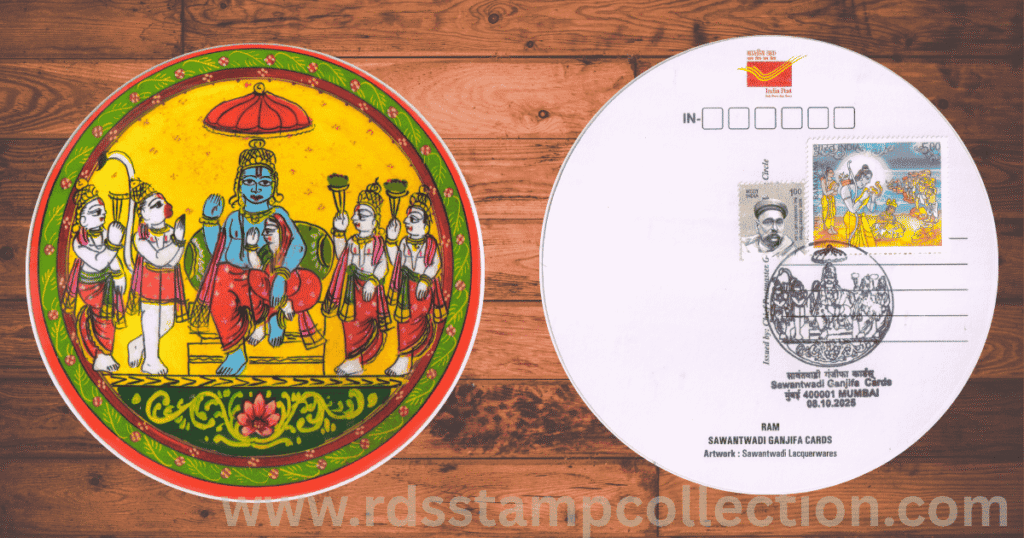
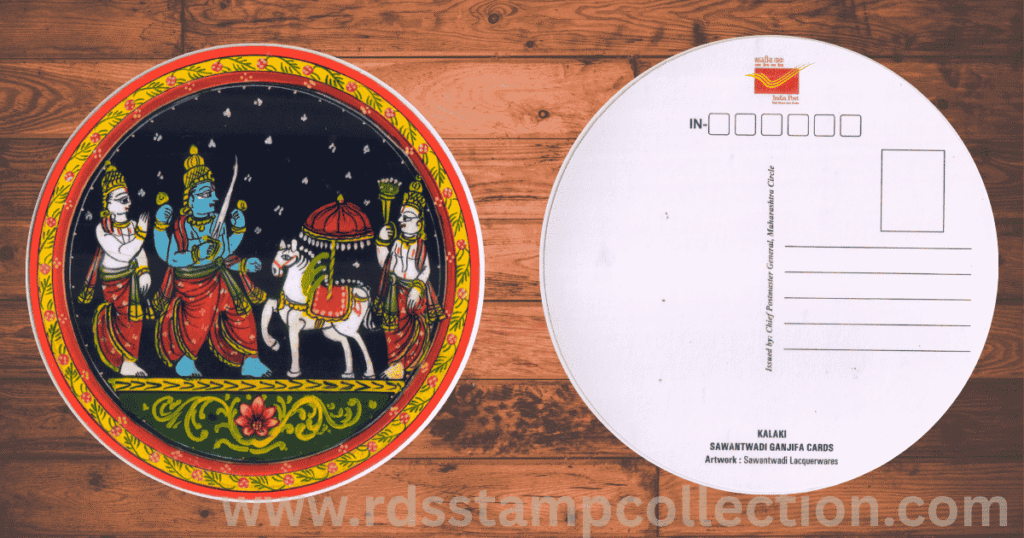
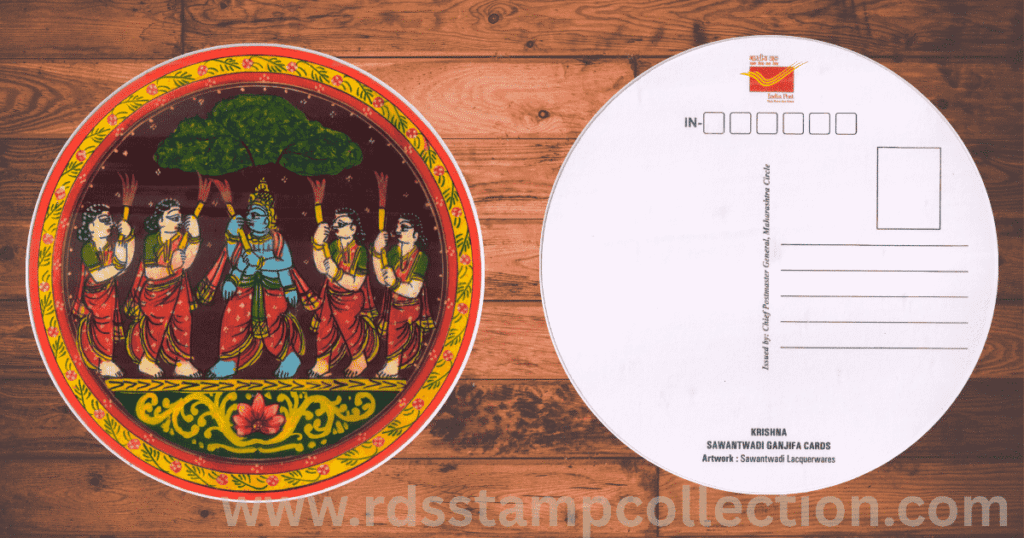
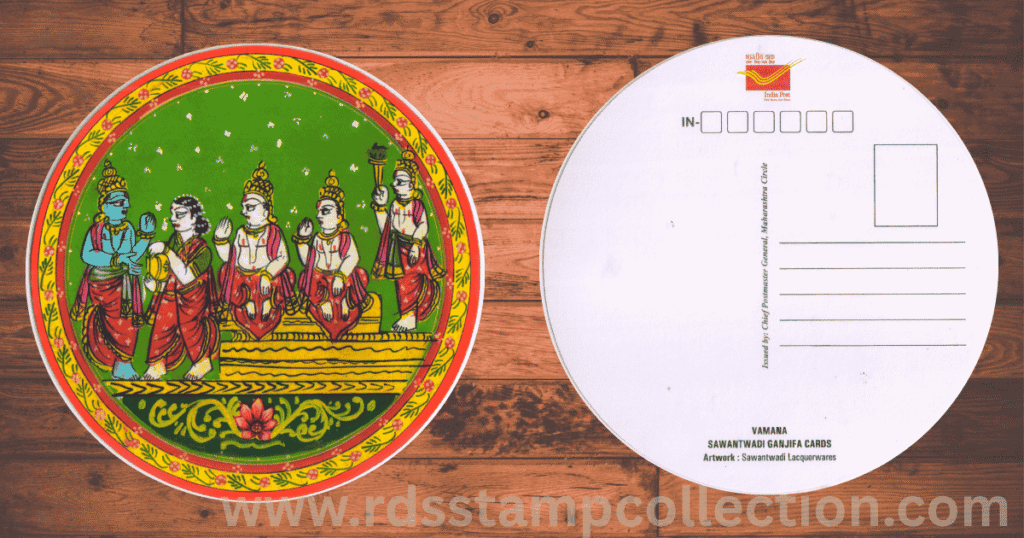
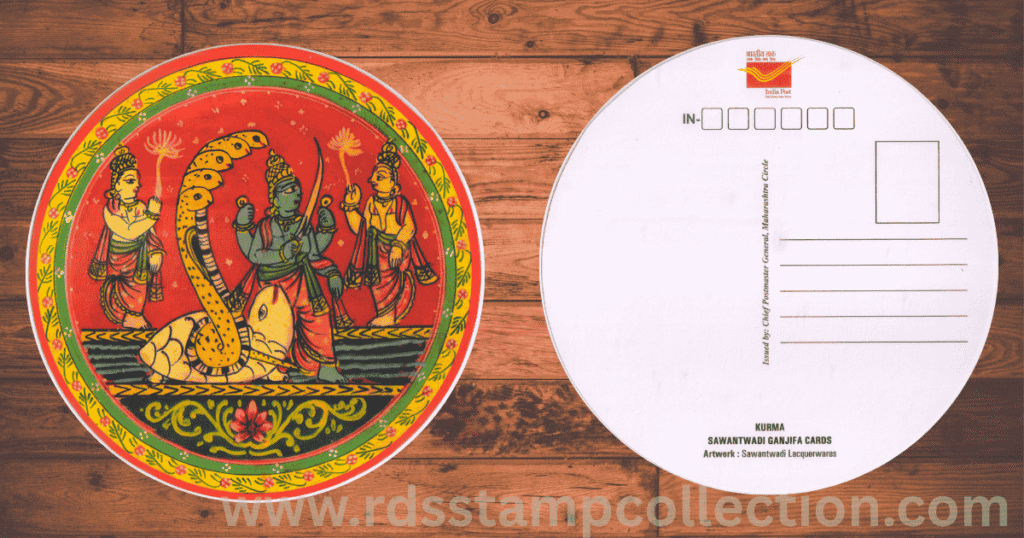
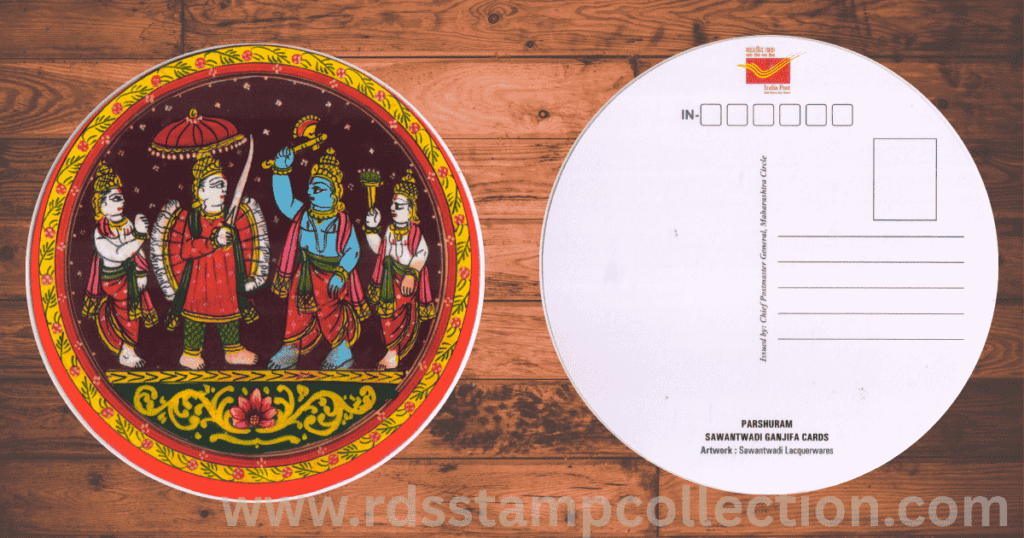
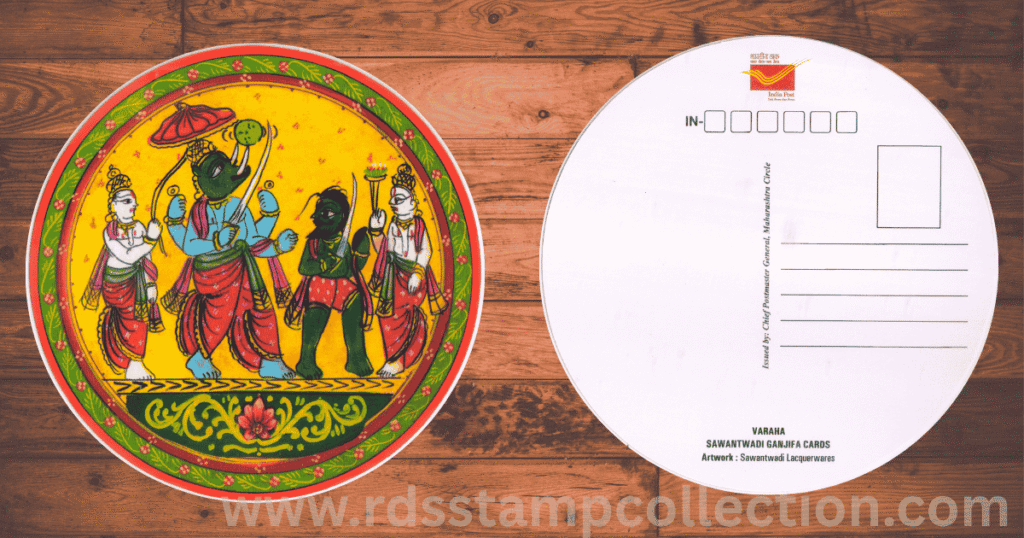
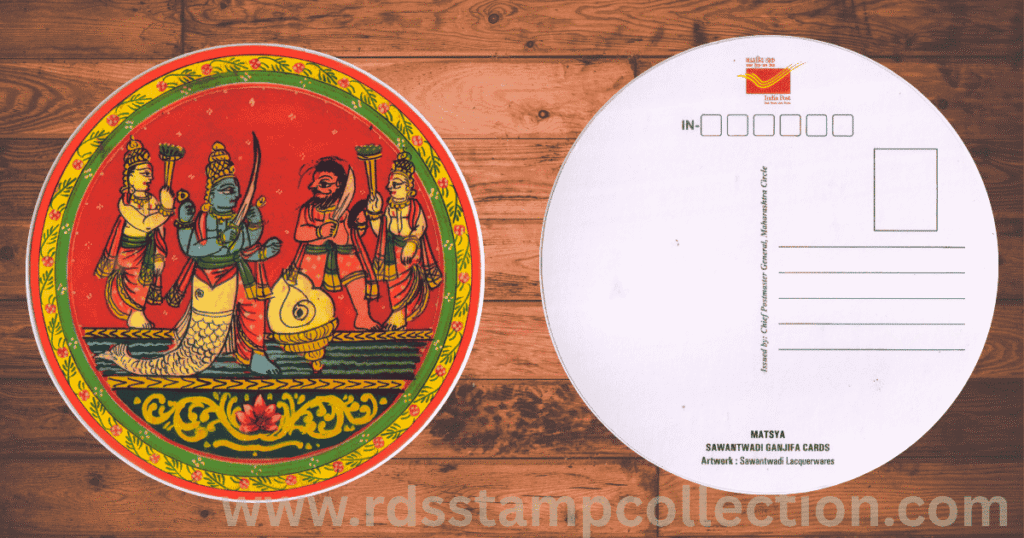
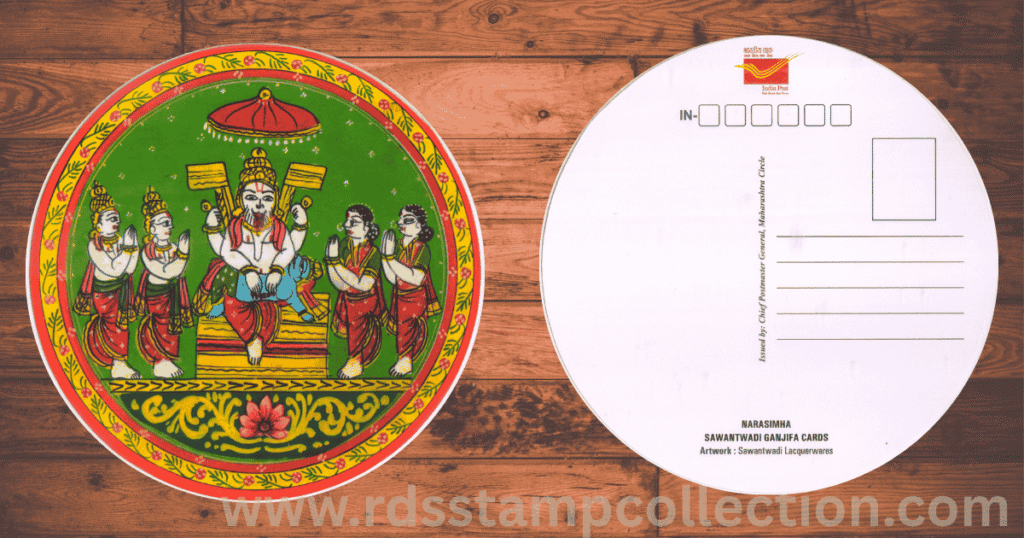
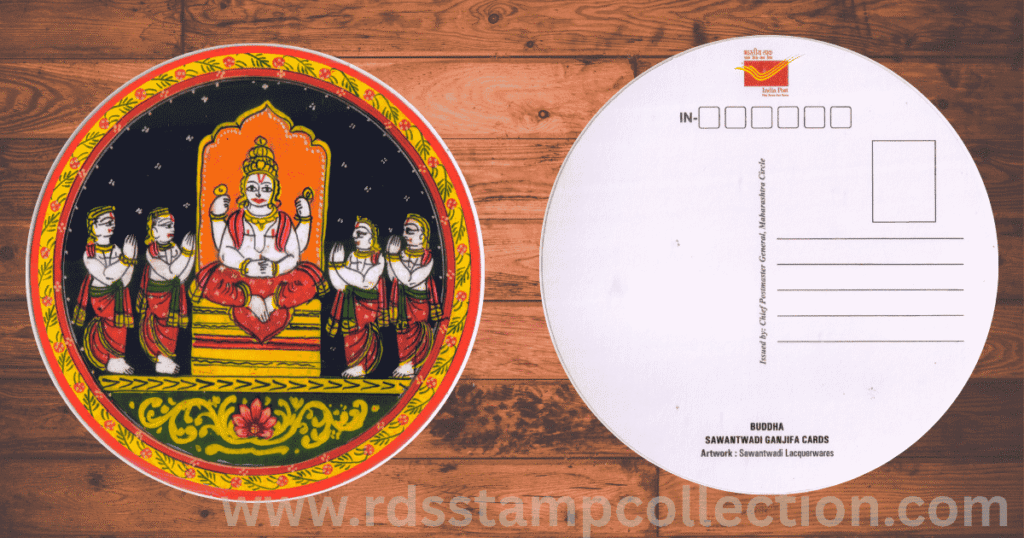
Cultural Significance
Ganjifa art was once a royal pastime. Today, it’s a folk treasure. These postcards connect us to that lost world.
- Shape: Usually circular
- Material: Cloth, palm leaf, or ivory
- Colors: Natural dyes, hand-mixed and painted
- Themes: Hindu mythology and Persian motifs
- Purpose: More than a game – it’s storytelling through art
Regions like Sawantwadi (Maharashtra), Puri (Odisha), Mysore (Karnataka), and West Bengal kept the tradition alive.
Each has its own painting style, but the soul remains the same – devotion through design.
Preservation and Revival
Ganjifa is now a rare and endangered art form. Only a few artisans still practice it. But thanks to efforts from India Post, museums, and craft fairs, it’s gaining attention again. The release of Ganjifa Postcards is part of this revival – using philately to tell forgotten stories.
For collectors, these postcards are not just paper. They are pieces of history – linking art, mythology, and the Indian postal legacy.
Collector’s Note
The story of Sawantwadi Ganjifa Postcards is also the story of a royal revival. The Bhonsle royal family of Sawantwadi played a huge role in bringing this dying art back to life.
In 1971, Lt. Col. Raja Bahadur Shivramraje Sawant Bhonsle and Rajmata Satvashiladevi Bhonsle founded Sawantwadi Lacquerwares to help local artists. Today, their legacy continues through Rajesahab Khem Sawant VI, Ranisaheb Shubhadadevi, Yuvraj Lakham, and Yuvrani Shraddha Lakham Sawant Bhonsle.
They don’t just protect the tradition – they live it. They promote workshops, exhibitions, and cultural education so the next generation can continue the craft.
Each Ganjifa postcard carries that spirit – royal, sacred, and timeless.
Closing Notes
The Ganjifa Postcards celebrate more than art. They represent a promise – to keep our heritage alive. Each postcard tells a divine story, hand-painted in spirit and reborn through philately.
If you ever visit Sawantwadi, make sure to visit the royal palace and lacquerware workshops. Watch the artisans paint, see the legacy unfold, and carry home a bit of India’s past.