Some artists are famous.
A very few are felt.
Zubeen Garg belonged to the second category.
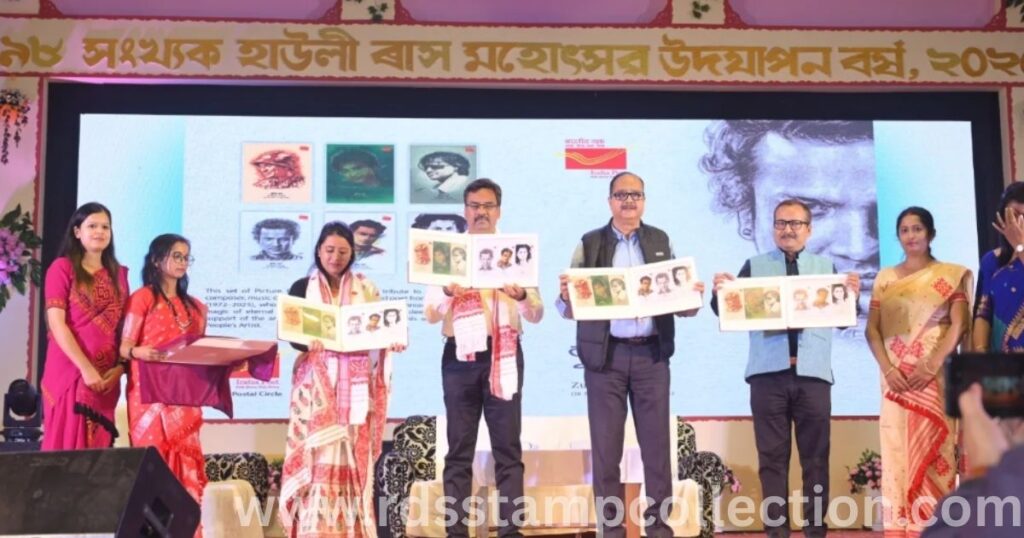
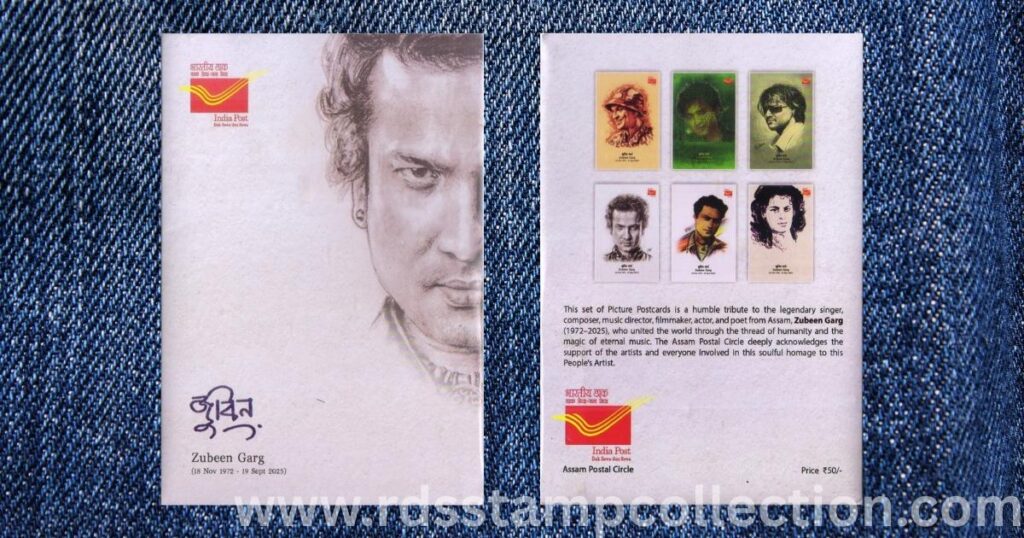
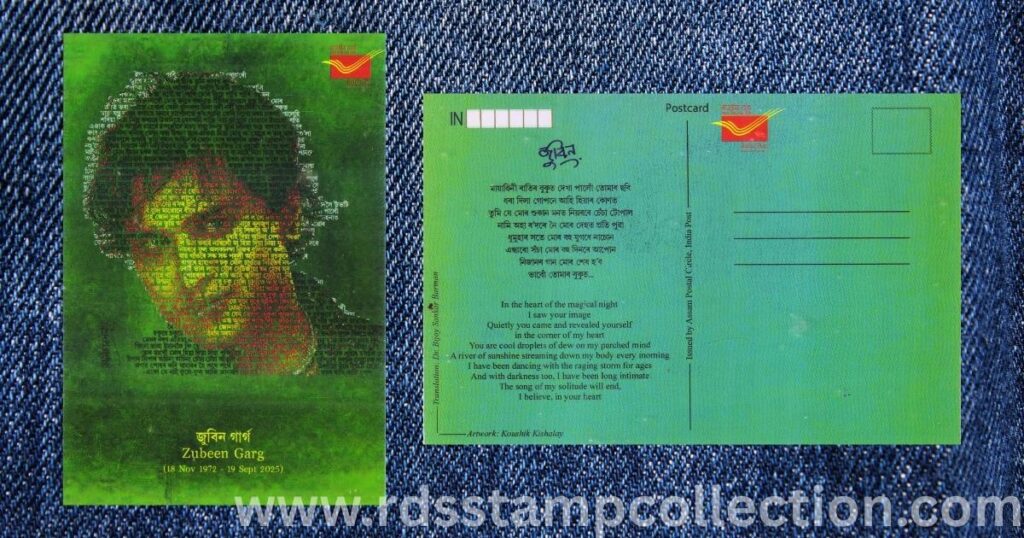
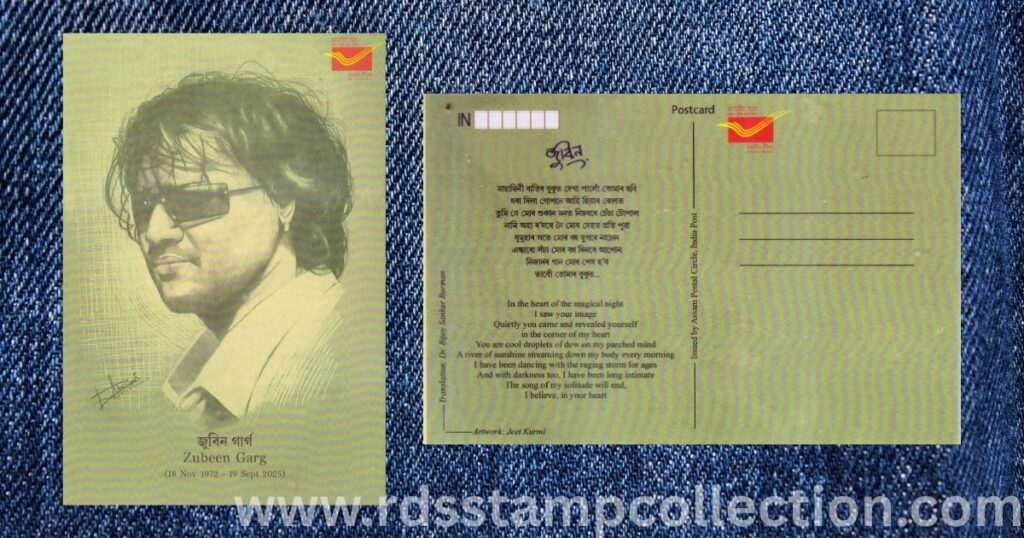
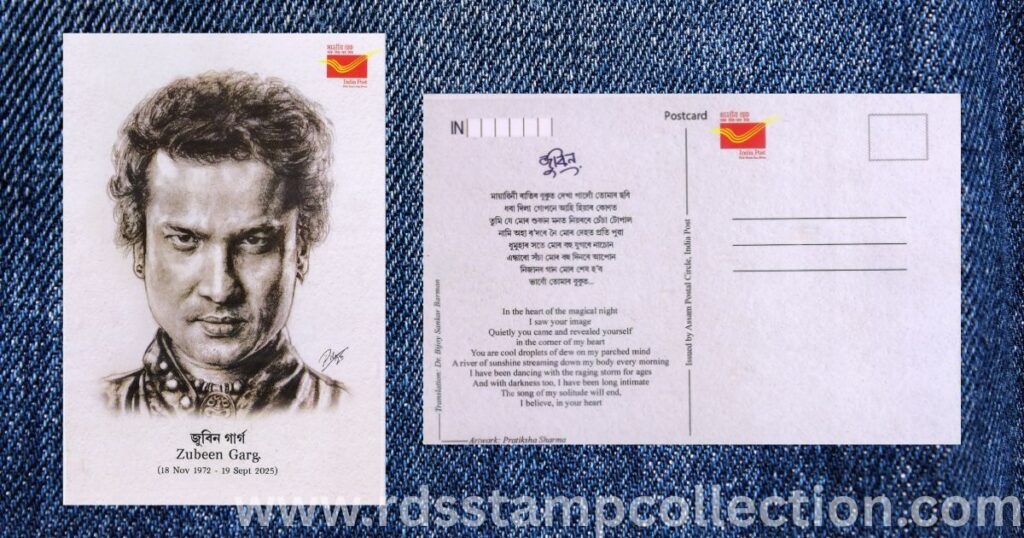
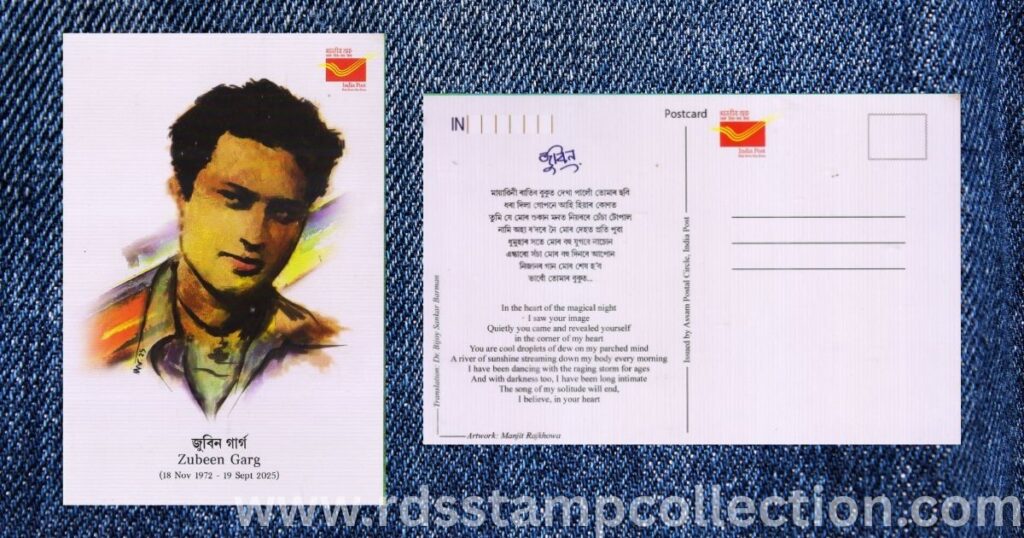
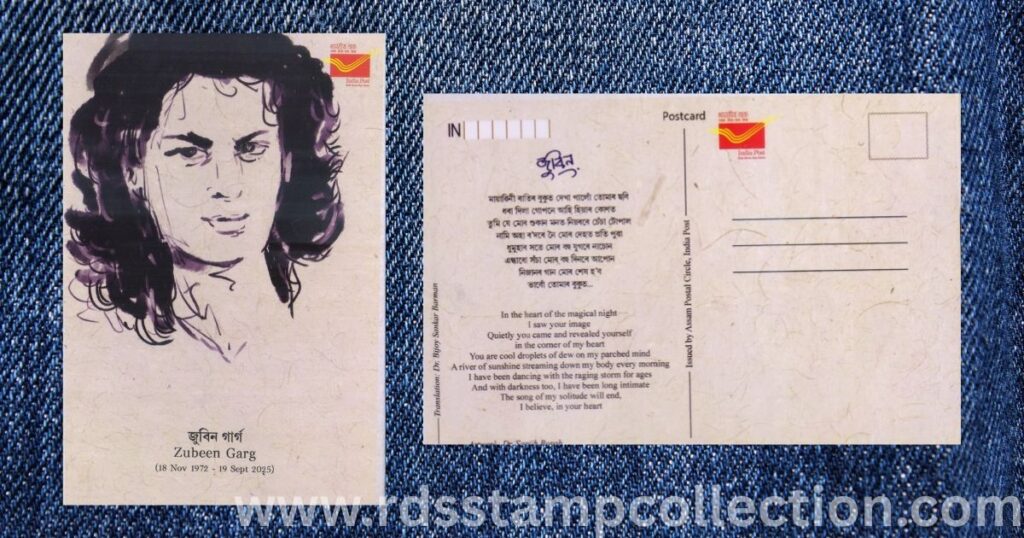
When news of his passing on 19 September spread, Assam didn’t just mourn a singer. It mourned a voice that had walked alongside its people for decades-through joy, anger, hope, protest, and pride. The tribute that followed was quiet but powerful: Assam Postal Circle released a set of six picture postcards in his memory, issued on his 53rd birth anniversary (18 November, 2025) during the 98th Howly Raas Mahotsav.
More than a singer from Assam

Zubeen Garg was never just a musician.
Yes, he broke out nationally with “Ya Ali” from Gangster (2006).
Yes, he sang in Hindi, Bengali, and many other languages.
But unlike many who leave regional music behind after tasting national fame, Zubeen did the opposite. He kept returning-again and again-to Assam.
- He continued releasing Assamese albums
- He sang in tribal and minority languages
- He performed at village events as easily as at packed stadiums
That choice mattered. A lot.
The People’s Artist
Titles usually come from institutions.
This one came from the ground.
Zubeen earned the name People’s Artist because:
- He sang about real problems
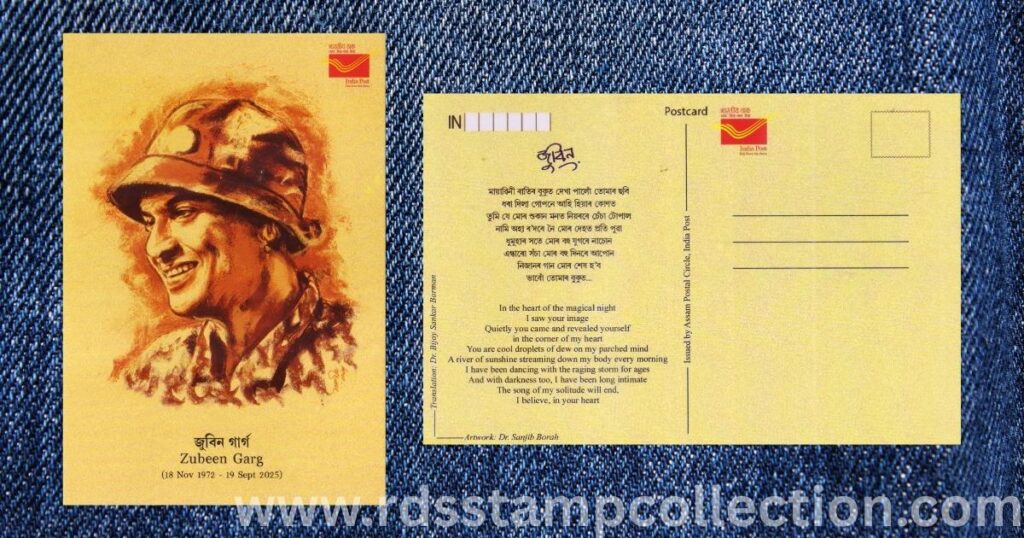
Songs like “Maya Bini Ratir Bukut” became anthems against drug abuse and social decay, especially among the youth.
- He stayed accessible
No manufactured distance. No untouchable-star image. He showed up where people needed him.
- He protected cultural identity
At a time when regional languages were being sidelined, he kept them alive—on stage, on record, and in public life.
People didn’t admire him from afar.
They claimed him.
The Postcards: Small Pieces of a Big Legacy
This is where philately gets interesting.
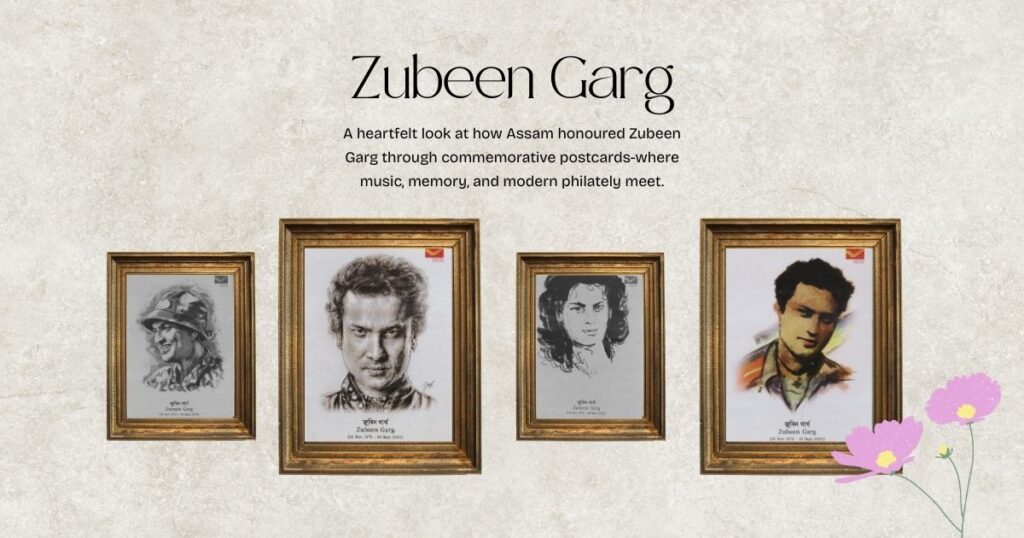
The six picture postcards released by Assam Postal Circle aren’t just portraits. Each card presents a different visual interpretation of Zubeen Garg—sketches, stylised art, intense expressions, softer moments.
Together, they tell a story:
- the rebel
- the poet
- the folk singer
- the cultural guardian
- the people’s voice
Released locally, rooted in a cultural festival, these postcards weren’t designed for collectors alone. They were meant for the community that shaped him.
That’s what makes them special.
Closing Notes
Too often, commemorative philatelic material feels forced. This one didn’t.
While the effort of the Assam Postal Circle deserves appreciation, speaking honestly as a philatelist, the print quality of the postcards is disappointing. The artwork is strong and thoughtfully executed, but it deserved better paper and sharper printing. With designs of this quality, the final production should have matched the intent.
It is also hard to ignore what’s missing. Alongside these postcards, a special cover or at least a special cancellation would have completed the tribute and given collectors something more enduring from a postal history perspective.
One can only hope that the department takes the next logical step and issues commemorative stamp(s) honouring Zubeen Garg’s legacy in the near future.
That said, these postcards still demonstrate what modern philately can do right:
Preserve living memory, not just mark dates
Celebrate regional icons, not only national headlines
Use art to tell a layered and emotional story
Mail has always been about connection.
So was Zubeen Garg.
Long after concerts fade and playlists change, these postcards will continue to travel—
from hand to hand, city to city, memory to memory.
They won’t sing.
But they will remind.
Of an artist who never stopped listening to his people.
And of a people who made sure he was never forgotten.