In 2025, India celebrates a remarkable milestone – 100 years of the Rashtriya Swayamsevak Sangh (RSS), one of the most influential volunteer-based organizations in the country’s social and cultural landscape. To commemorate this centenary, the Department of Posts, Government of India, has issued a commemorative postage stamp that beautifully captures the essence of the RSS’s century-long journey of discipline, service, and national spirit.
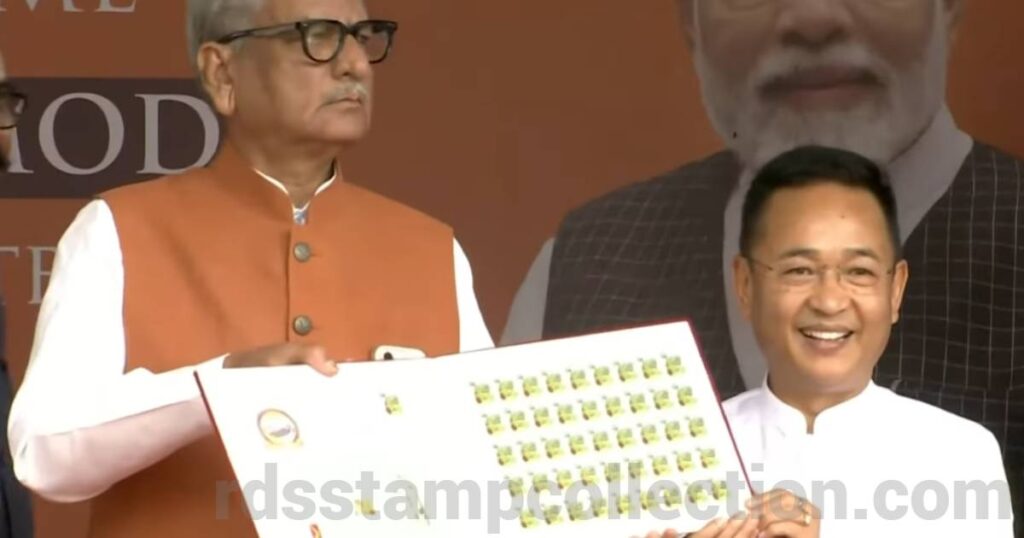
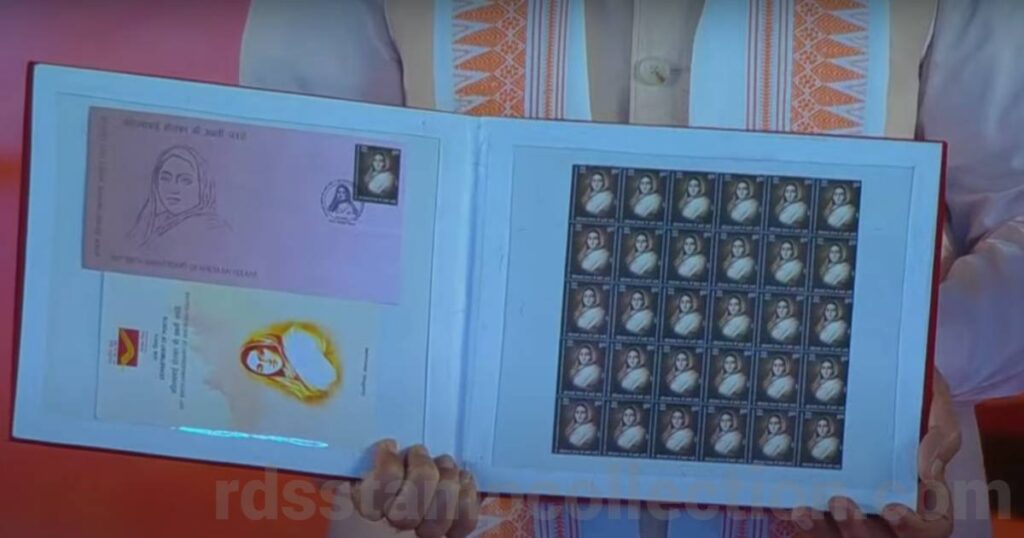
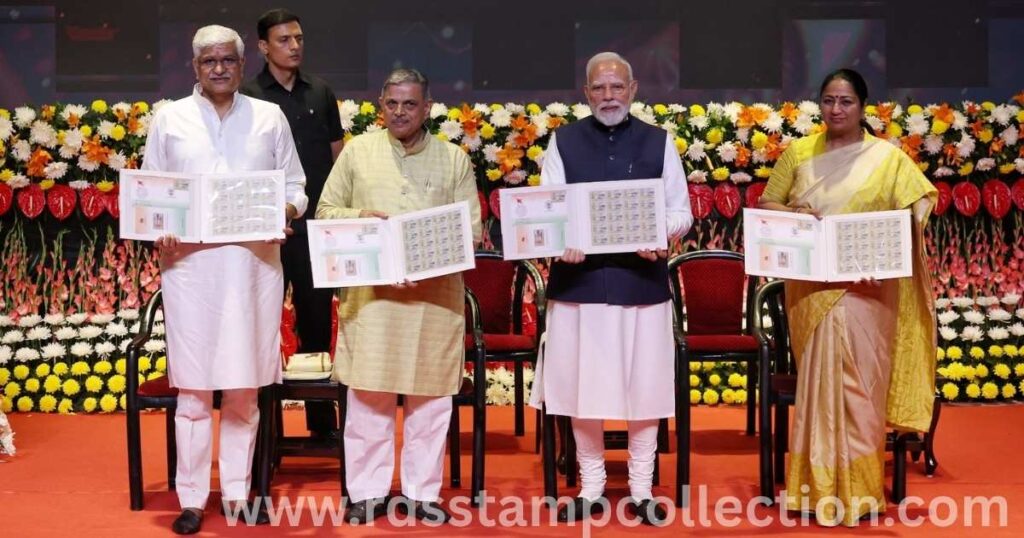
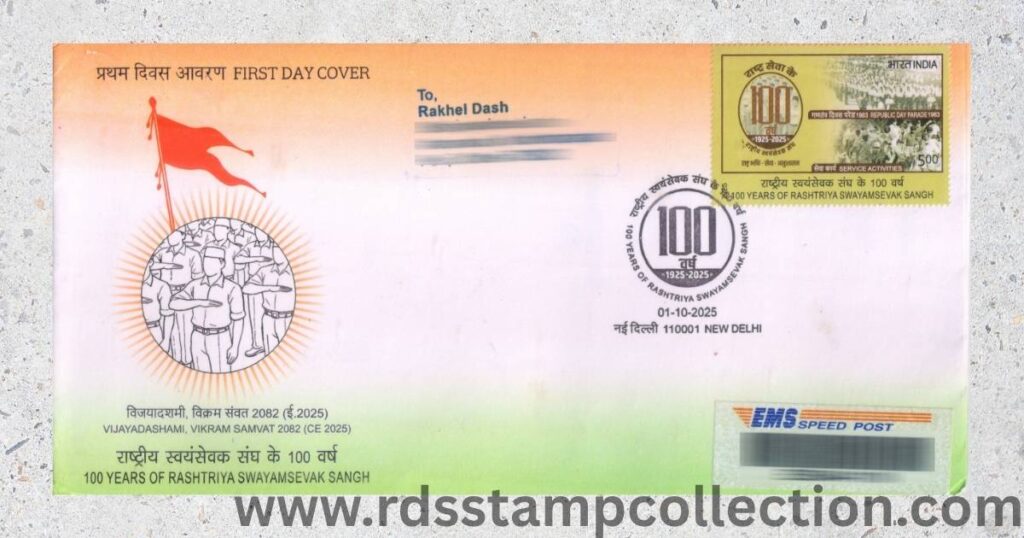
The commemorative stamp, First Day Cover and Brochure were formally released by Prime Minister Narendra Modi on 1st October 2025 during a special ceremony held in New Delhi.
The stamp, valued at ₹5, is more than just a collector’s item – it’s a visual tribute to a movement that began in Nagpur, Maharashtra, in 1925, and grew into a nationwide network dedicated to community service and civic engagement.
The Stamp Design: A Story Told in Symbols
The stamp features the bold inscription “100 वर्ष 1925–2025” (100 Years of National Service) framed by the RSS motto – Rashtrabhakti, Seva, Anushasan (Patriotism, Service, Discipline). The central red “100” radiates a sense of continuity and vigor, symbolizing the unbroken spirit of volunteerism that defines the RSS.
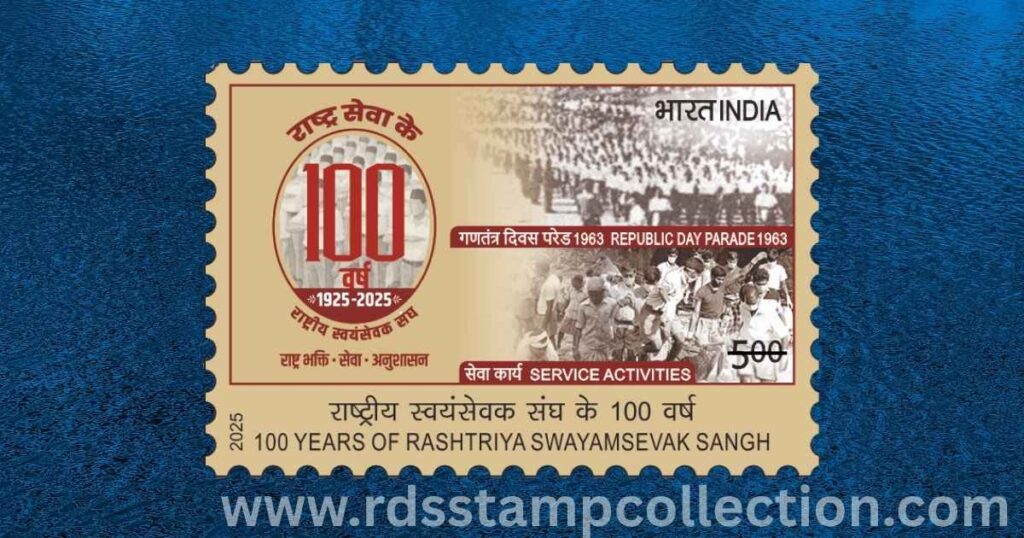
Two historical images enrich the background:
- The 1963 Republic Day Parade, where RSS volunteers are seen marching in formation – a symbol of unity and national pride.
- A scene depicting community service activities, underscoring the organization’s commitment to humanitarian efforts, disaster relief, and rural development.
The sepia tones evoke a sense of history and legacy, while the crimson highlights add modern vitality. The stamp contains bilingual inscriptions in Hindi and English like other stamps by India Post.
Together, these elements narrate a story – one of discipline in motion, service in action, and patriotism in practice.
So this is all about the stamp. If you want to know more about the history and legacy of RSS then read further.
The Rashtriya Swayamsevak Sangh: A Century of Civic Commitment
Origins and Vision
The RSS was founded on 27 September 1925 by Dr. Keshav Baliram Hedgewar, a physician and freedom activist from Nagpur. The 1920s were a period of deep social and political transformation in India. Hedgewar believed that beyond political independence, India needed a moral and cultural rejuvenation – a reawakening of civic responsibility and social unity.
The RSS was thus born as a volunteer-driven movement focused on character building, discipline, and national consciousness. Its organizational units, called Shakhas, became the heart of its activity – local gatherings where volunteers (Swayamsevaks) engage in physical training, patriotic songs, discussions, and social service.
Growth and Expansion
After Hedgewar’s death in 1940, leadership passed to Madhav Sadashiv Golwalkar (Guruji), under whom the RSS expanded rapidly. Later, Balasaheb Deoras guided the organization through India’s post-independence years, broadening its reach across urban and rural India.
Today, the RSS has tens of thousands of daily shakhas and millions of participants across the country. Its structure remains decentralized – each shakha acts as a community hub – but its ideals are shared through a tightly-knit network of volunteers and affiliated institutions.
The “Sangh Parivar”: Beyond the Shakha
One of the RSS’s enduring legacies is the creation of a vast family of affiliated organizations, collectively known as the Sangh Parivar. Each affiliate focuses on a different sector of public life, reflecting the RSS philosophy of service through action.
Some notable affiliates include:
- Bharatiya Janata Party (BJP): The political wing that emerged from the Jana Sangh, founded in 1951.
- Akhil Bharatiya Vidyarthi Parishad (ABVP): A student organization that promotes civic participation among youth.
- Bharatiya Mazdoor Sangh (BMS): One of India’s largest trade unions.
- Seva Bharati: Focused on welfare programs, health camps, disaster relief, and community development.
- Vidya Bharati: A network of schools emphasizing values-based education rooted in Indian culture.
This network reflects the RSS’s broader mission – to foster social cohesion, education, and community development beyond formal politics.
RSS and Community Service: Quiet Work, Wide Impact
While often associated with its ideological positions, the RSS’s most enduring and less-publicized impact has been in grassroots service activities. Volunteers regularly organize:
- Flood and earthquake relief efforts
- Health and vaccination drives
- Literacy and rural education programs
- Blood donation and medical camps
- Women’s empowerment initiatives
- Village cleanliness and sanitation projects
During major national crises – from natural disasters to the COVID-19 pandemic – RSS volunteers have been among the first responders in many regions. This tradition of selfless service (seva) lies at the core of its ethos.
Interesting Facts About the RSS
Daily Discipline: Every day, thousands of shakhas (local branches) meet in open grounds across India for physical exercises, prayers, and discussions – a practice largely unchanged since the 1920s.
Volunteer Base: The RSS is among the largest volunteer organizations in the world, with an estimated over 5 million members.
Non-political Origin: For decades after its founding, the RSS avoided direct political participation, focusing instead on cultural and moral development.
Influence on Education: The Vidya Bharati network operates over 13,000 schools across India, promoting value-based learning.
Disaster Response: The RSS and its affiliates have been key players in relief operations during major disasters, including the 2001 Gujarat earthquake and 2018 Kerala floods.
Uniform and Identity: Traditionally, swayamsevaks wore khaki shorts – a symbol of simplicity and discipline. In 2016, the RSS adopted brown trousers, marking a modernization of its dress code.
Global Reach: Beyond India, the RSS maintains cultural outreach programs in countries with large Indian diasporas – promoting cultural exchange and social service abroad.
Closing Notes
The release of the 100 Years of Rashtriya Swayamsevak Sangh stamp celebrates a century of service, discipline, and nation-building. Issued on Vijayadashami, 1st October 2025, and released by Prime Minister Narendra Modi, it reminds us how collective effort and civic responsibility can shape a nation’s journey.
Although it’s considered a political release, this stamp has already caught the attention of many collectors and non-collectors alike. If you collect stamps on social movements or national service, this one definitely deserves a spot in your album.
Interestingly, its early shortage at post offices and the buzz around it have made it quite sought-after. Whether it turns out to be just another commemorative issue or becomes stamp like the Azadi Ka Amrit Mahotsav (AKAM) stamp — only time will tell.