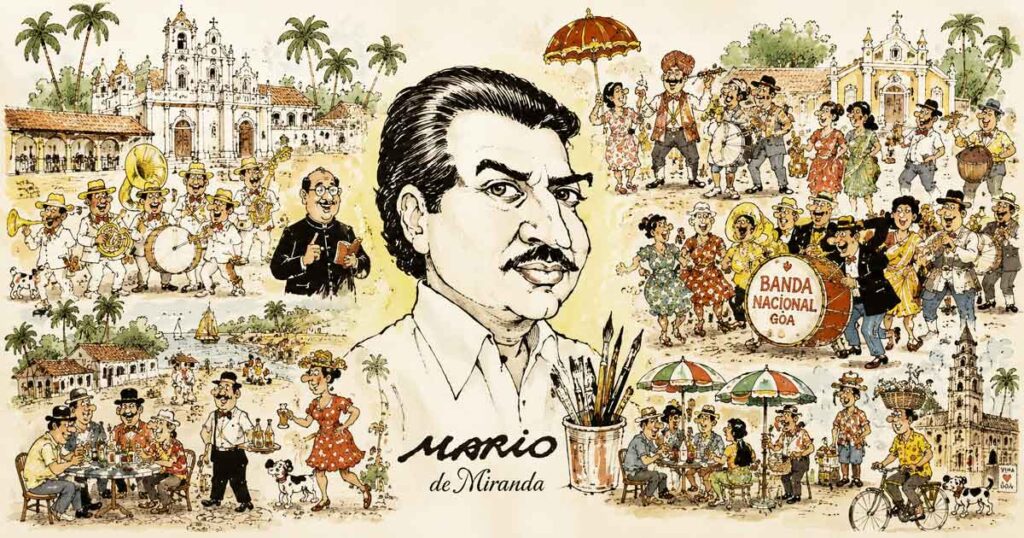
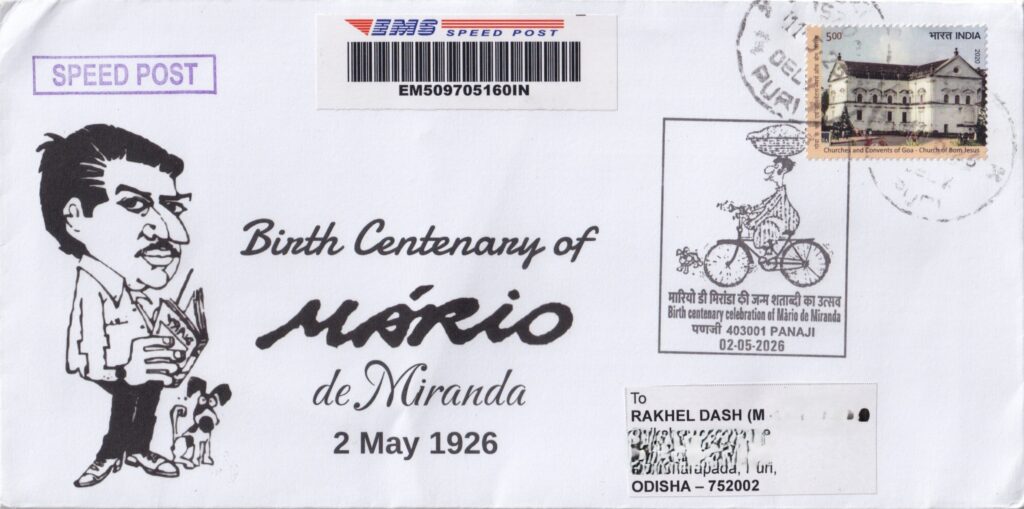
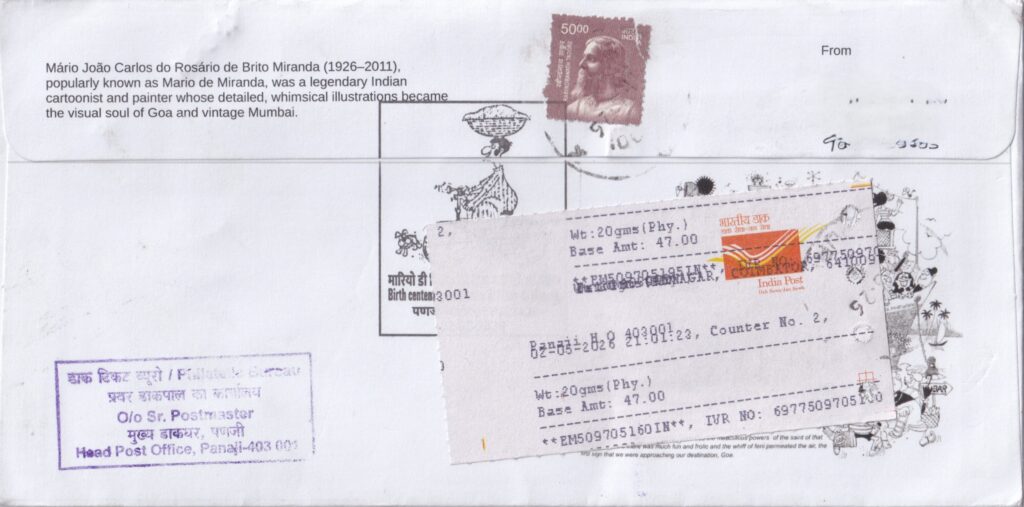
Recently, India Post marked the birth centenary of Mario de Miranda, one of Goa’s most loved cartoonists, illustrators, and painters. His full name was Mário João Carlos do Rosário de Brito Miranda. He was born on 2 May 1926 in Goa and died in 2011.
India Post, Maharashtra Circle, Goa Region, issued a set of four picture postcards and a pictorial cancellation at Panaji on 2 May 2026.
Mario de Miranda’s art had a very clear identity. Crowded Goan villages. Musicians. Priests. Dogs. Tourists. Weddings. Brass bands. Every character looks alive. Every frame feels like a small theatre.
The picture postcards are the real highlight.
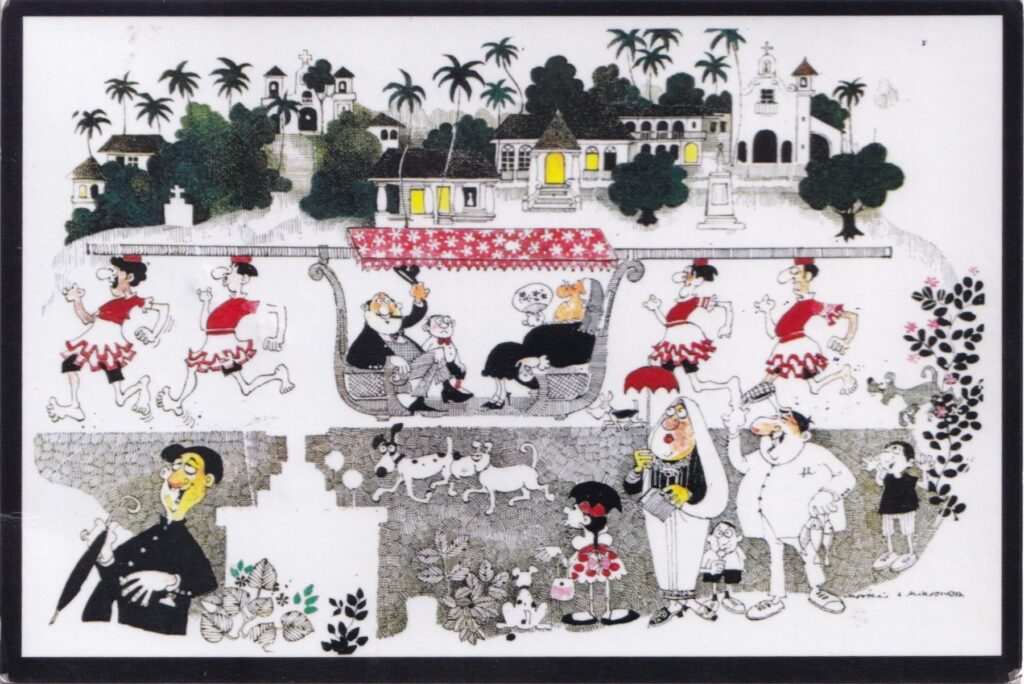
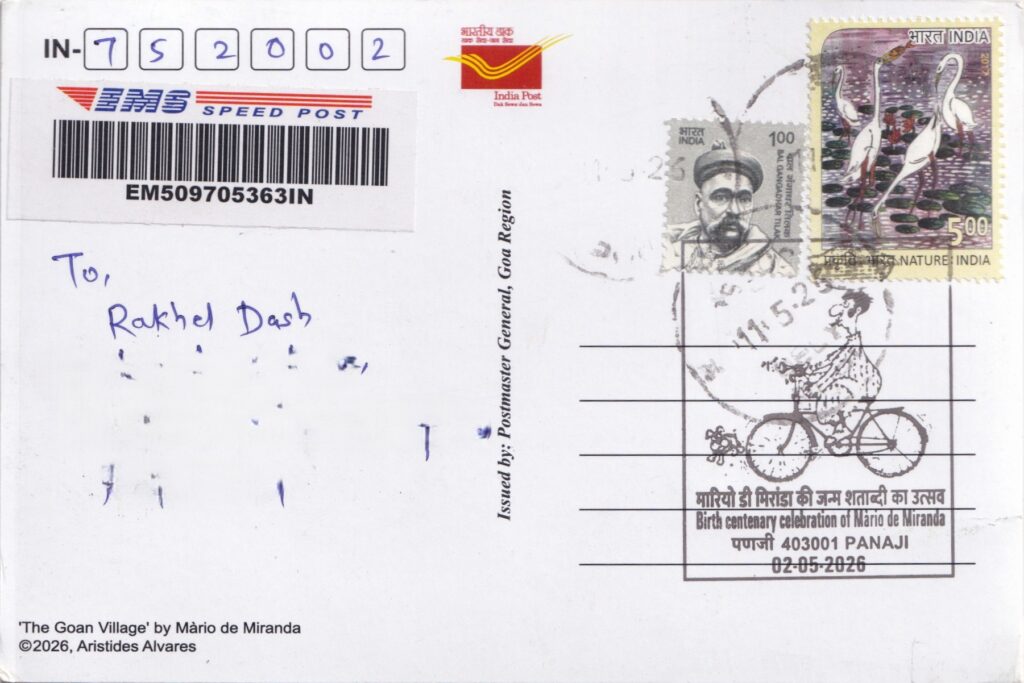
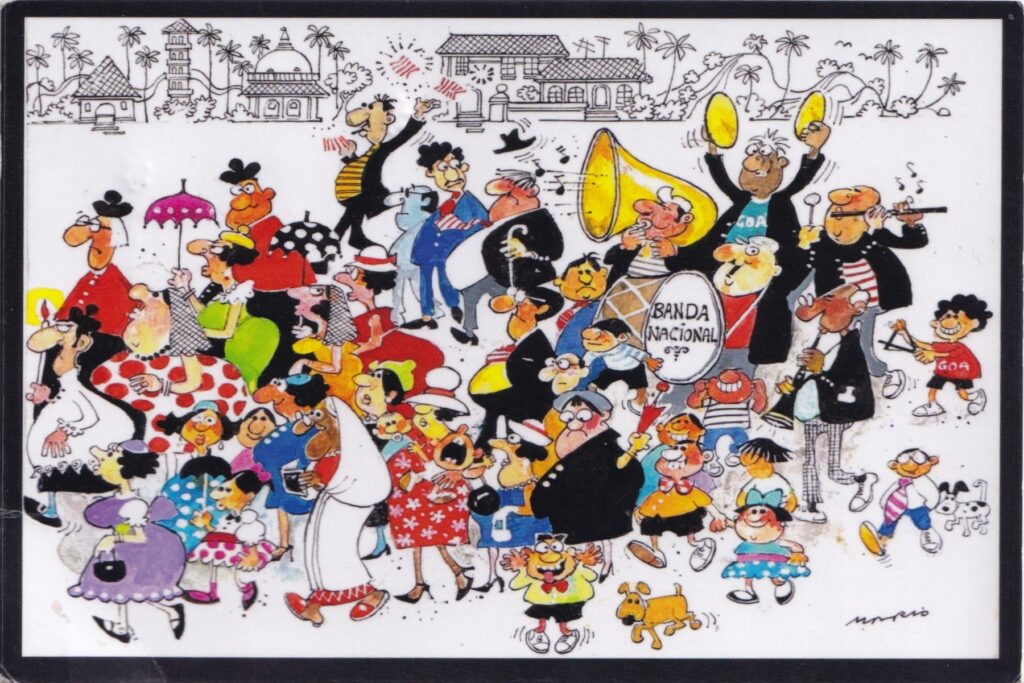
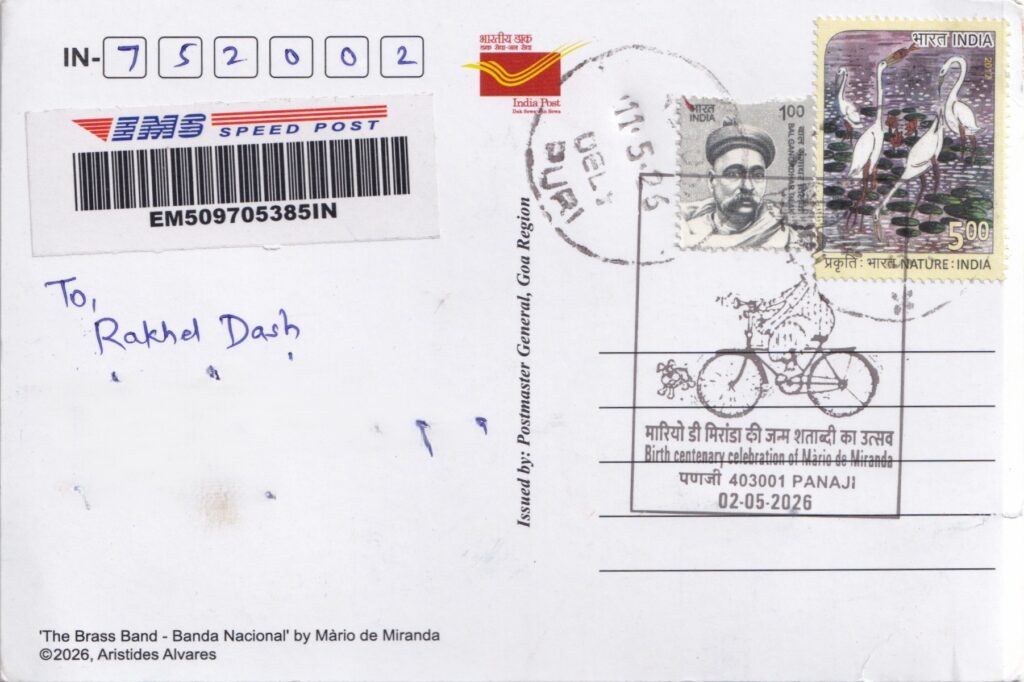
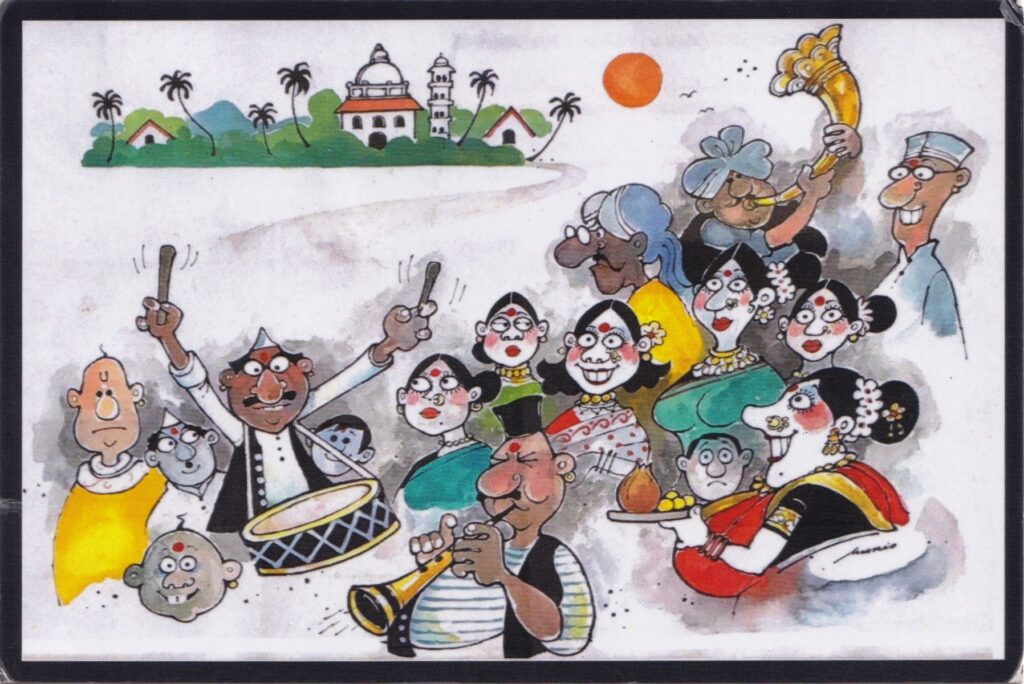
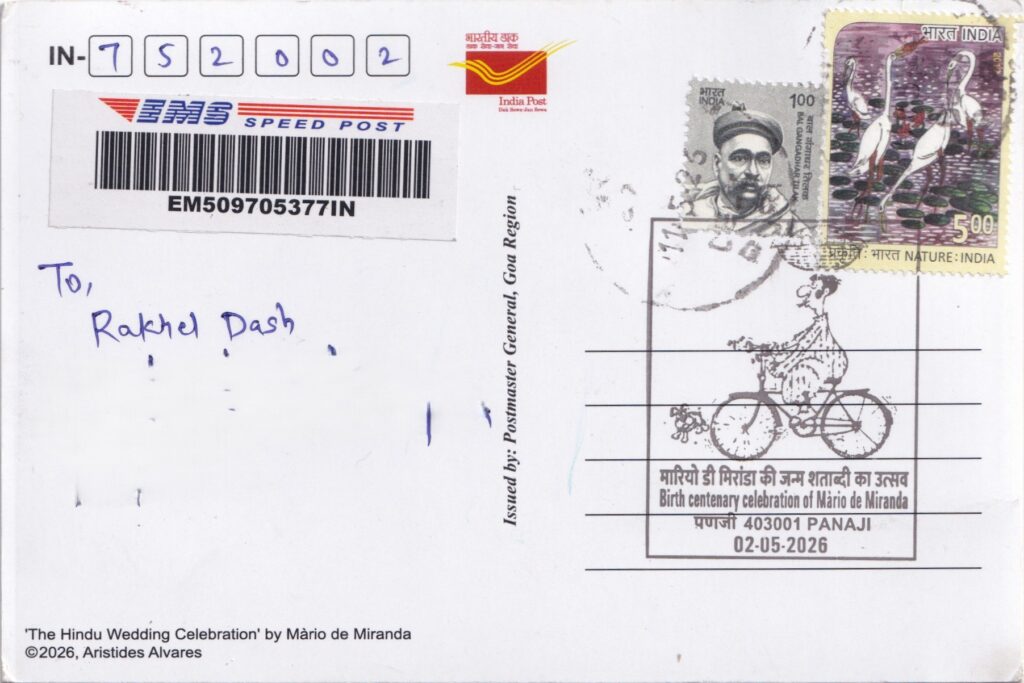
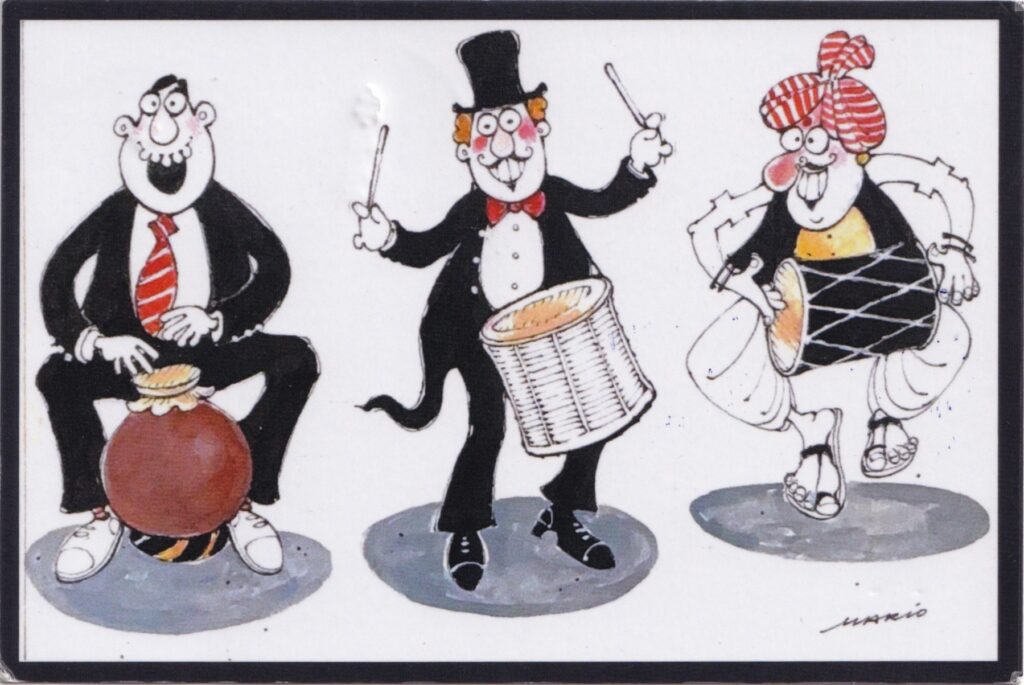
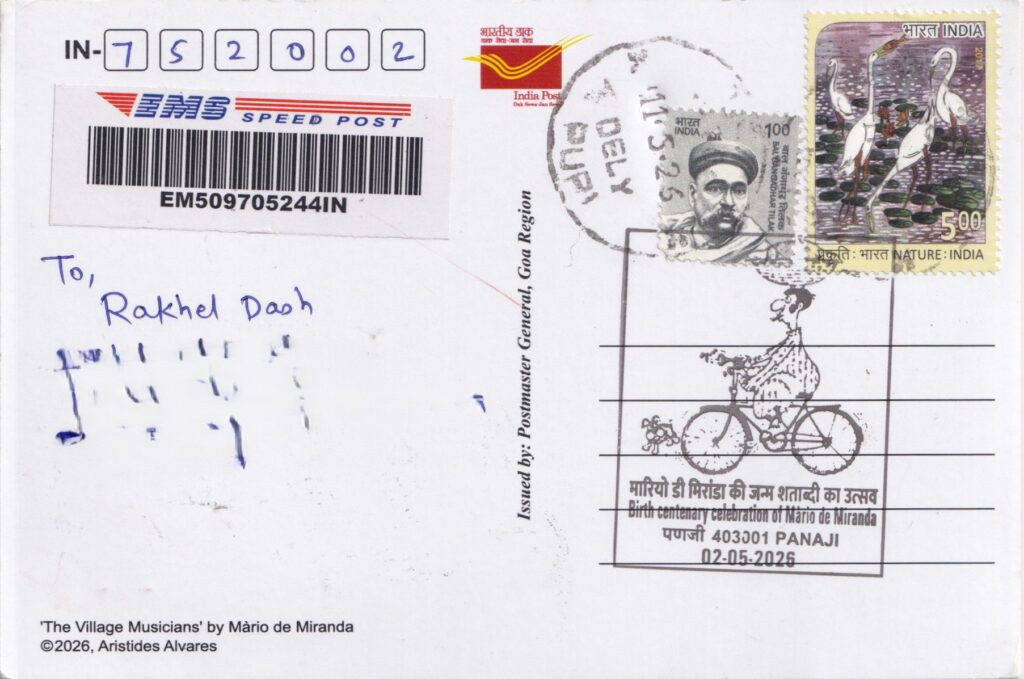
When I first heard about this issue, my first reaction was simple: why is Mario still so popular in Goa and Mumbai? If you are also curious to know ‘Why?’ Here is what I found.
Mario gave Goa a visual language of its own. His villages, taverns, brass bands, churches, markets, weddings, and local characters became instantly recognizable.
He also reached far beyond Goa. His work appeared in major publications such as The Illustrated Weekly of India and The Times of India, giving his cartoons a national audience.
His work documented social life with humour. He captured people’s habits, class behaviour, urban chaos, village culture, and everyday absurdity without making it boring or academic.
His art became collectible. His illustrations appeared in books, posters, murals, restaurants, galleries, postcards, and now postal tributes. That is why philatelic material on him has strong cultural value.
His contribution was also formally recognised. He received the Padma Shri in 1988, the Padma Bhushan in 2002, and the Padma Vibhushan posthumously in 2012.
This beautiful set is a modern postal tribute to Mario de Miranda and Goa’s visual culture.
Share your thoughts: which one is your favourite – The Goan Village, Banda Nacional, Hindu Wedding Celebration, or Village Musicians?