
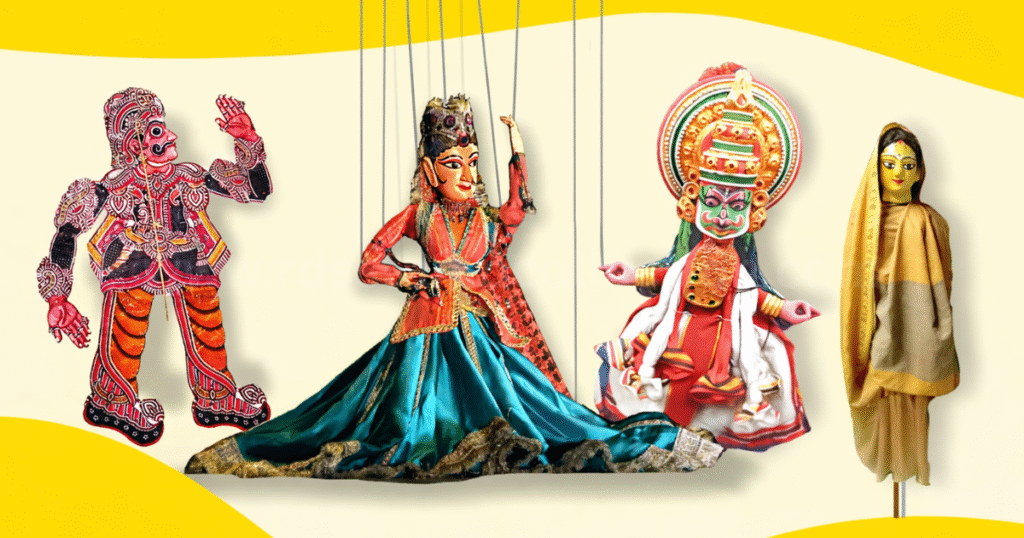
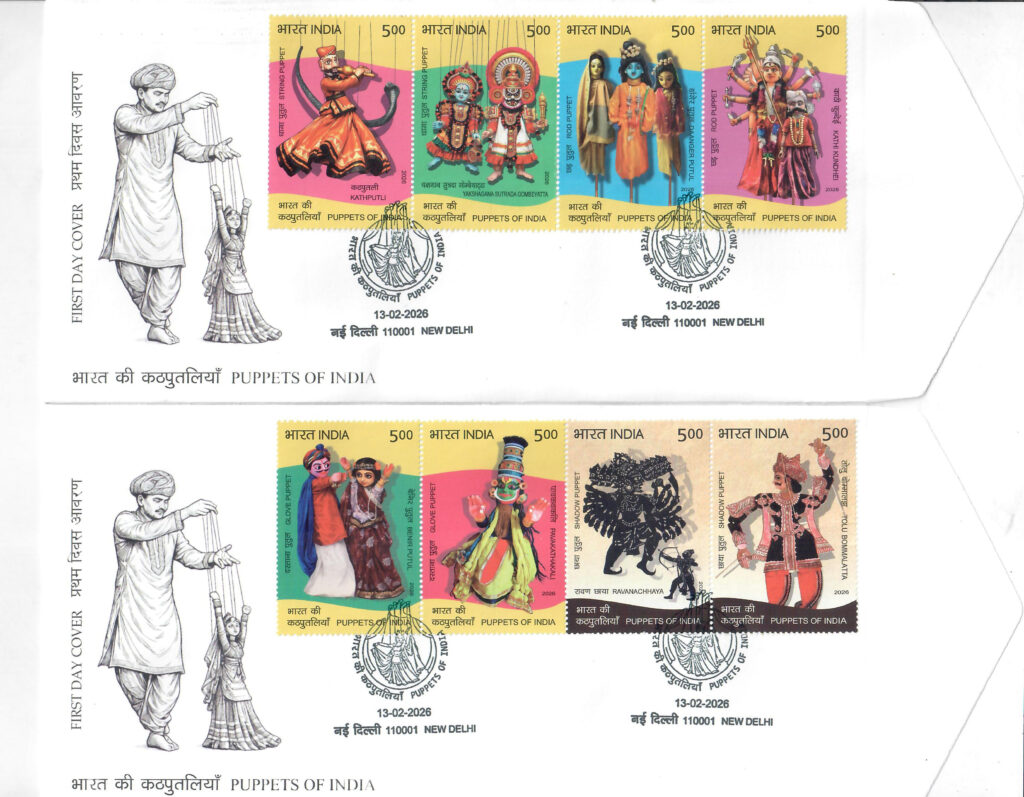
On 13 February 2026, India Post issued a Set of 8 Commemorative Postage Stamps celebrating the rich tradition of Indian puppetry.
The release took place at the 22nd Ishara International Puppet Theatre Festival.
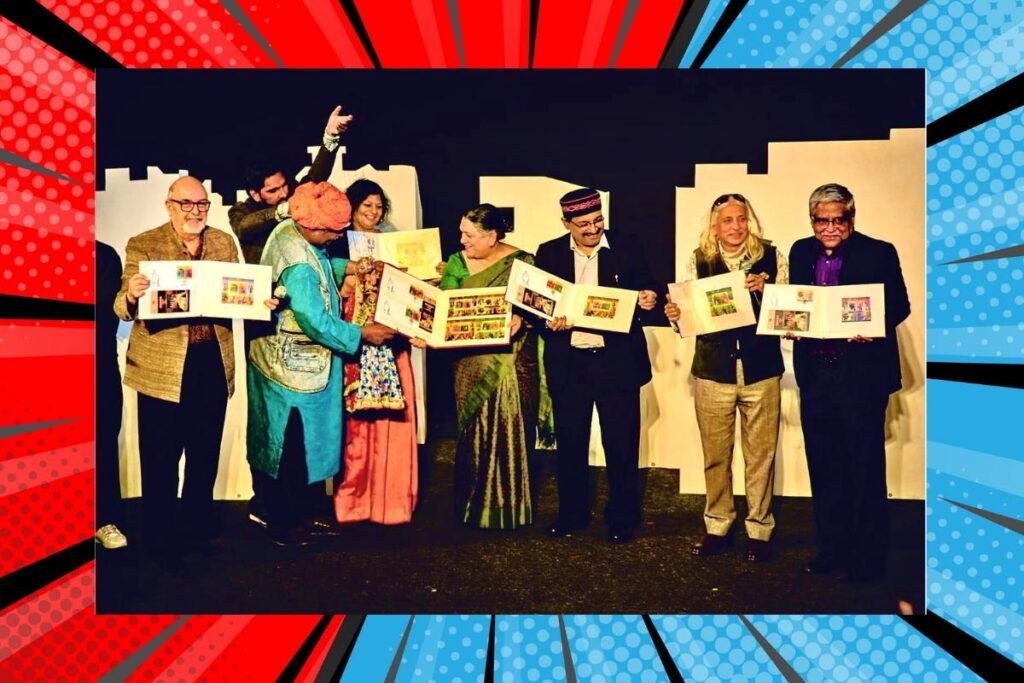
The stamps were formally released by Secretary Posts, Smt. Vandita Kaul, in the presence of renowned puppetry stalwarts Dadi Padumjee and Sanjoy K Roy.
This issue honours one of India’s oldest storytelling traditions – now preserved in miniature philatelic form.
Significance
Indian puppetry is not a single art form. It is a diverse cultural tradition spread across regions.
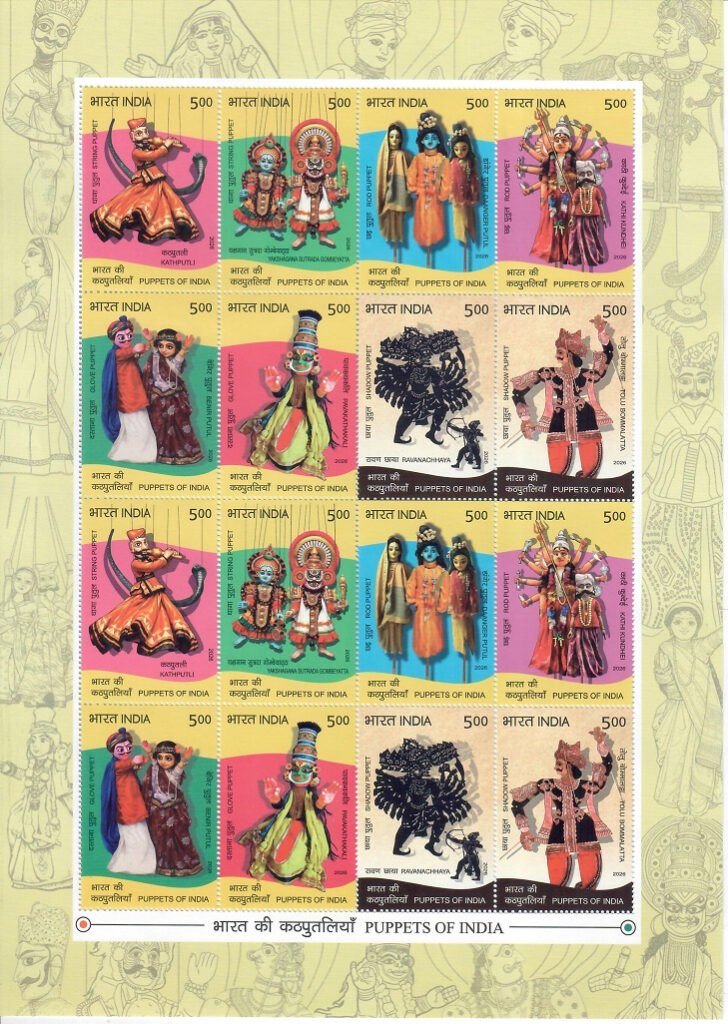
The 2026 stamp series highlights four major puppetry categories:
- String puppets
- Rod puppets
- Glove puppets
- Shadow puppets
For collectors, this issue is culturally layered. It represents folk art, mythology, theatre, and heritage — all within one thematic set.
The 8 Stamps – Regional Highlights
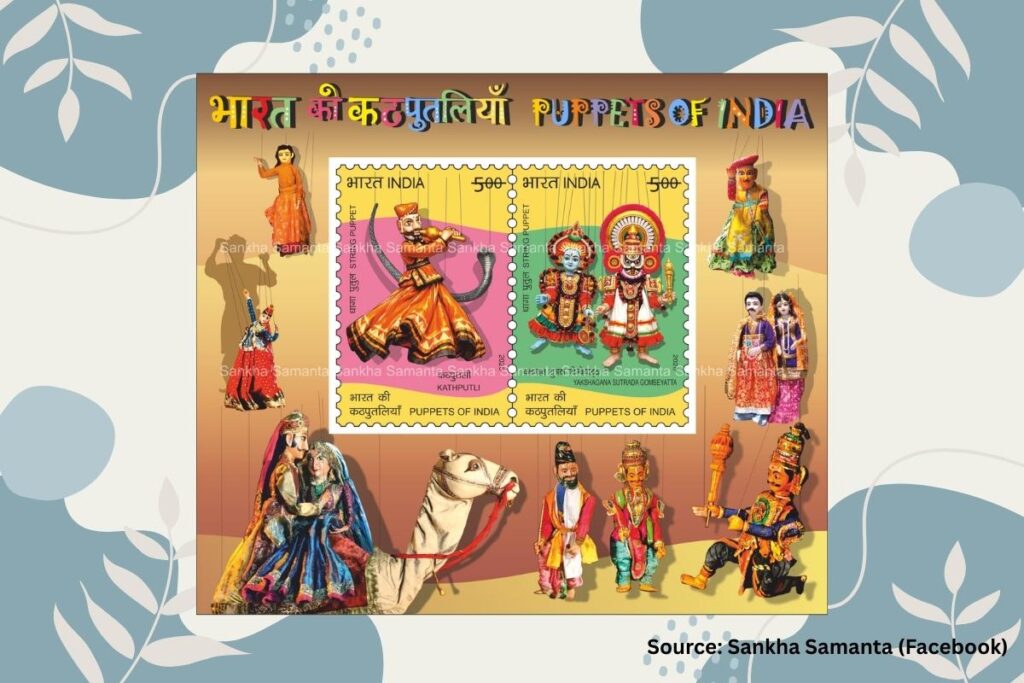
1. Kathputli
Origin: Rajasthan
Type: String Puppet
India’s most iconic puppetry form.
Carved wooden figures dressed in bright Rajasthani costumes.
Controlled using strings.
Themes include kings, warriors, and folk legends.
Collector’s insight: Kathputli is widely recognised internationally. Its inclusion strengthens thematic collections on Rajasthan, Folk Art, and Performing Arts.
2. Yakshagana Sutrada Gombeyatta
Origin: Karnataka
Type: String Puppet
Inspired by the classical Yakshagana theatre tradition.
Highly ornate costumes and expressive faces.
Stories from Ramayana and Mahabharata.
Collector’s insight: Ideal for mythology-themed collections and Karnataka regional philately.
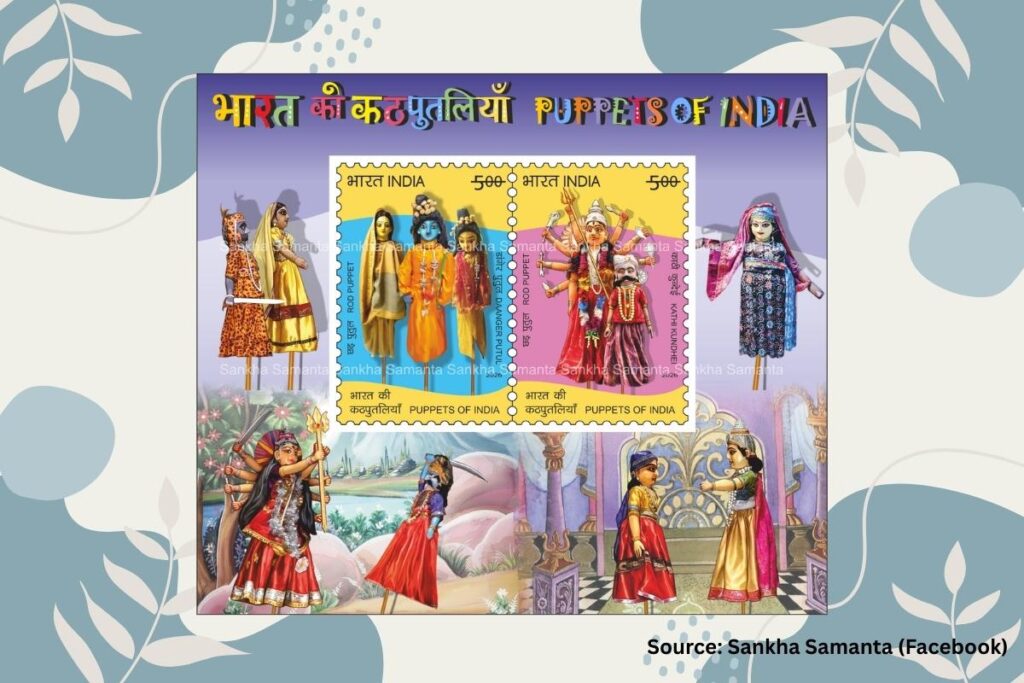
3. Daanger Putul
Origin: West Bengal
Type: Rod Puppet
Large puppets operated with rods from below.
Used for mythological storytelling and folk drama.
Collector’s insight: Rod puppetry is less frequently depicted in Indian stamp issues, increasing thematic relevance.
4. Kathi Kundhei
Origin: Odisha
Type: String Puppet
Traditional Odia string puppetry.
Depicts mythology and regional folklore.
Collector’s insight: Important addition for Odisha thematic collectors and regional cultural exhibits.
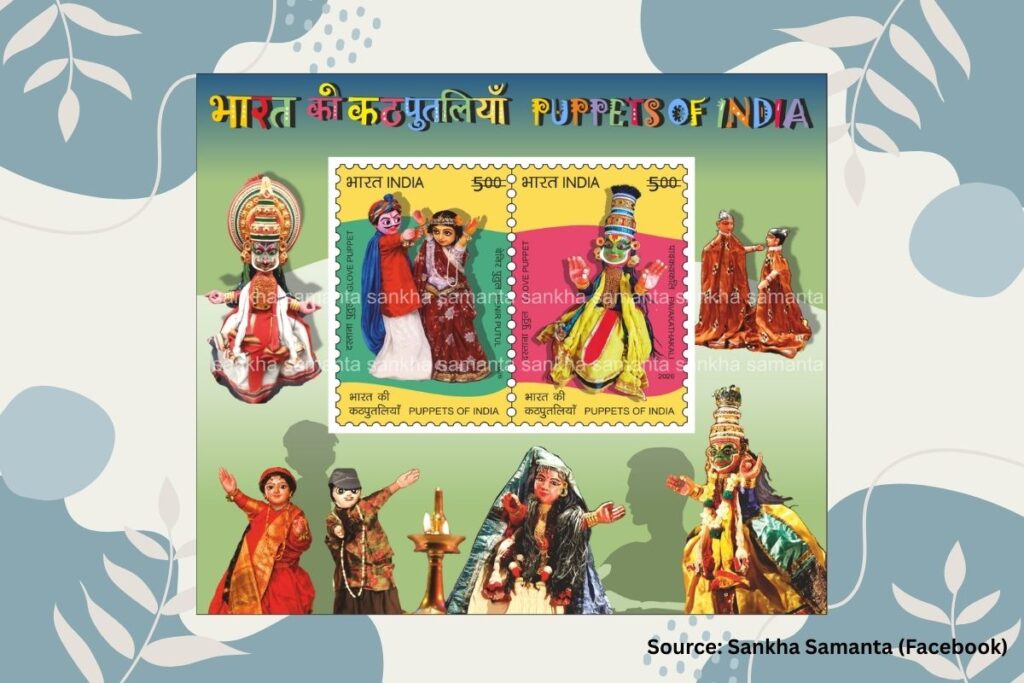
5. Benir Putul
Origin: West Bengal
Type: Glove Puppet
Small glove puppets worn on the hand.
Head made of clay or wood.
Primarily mythological narratives.
Collector’s insight: Glove puppetry representation balances the diversity of the set.
6. Pavakathakali
Origin: Kerala
Type: Glove Puppet
Based on Kathakali dance-drama.
Elaborate makeup and costume details.
Stories from epics.
Collector’s insight: Strong crossover appeal for Kathakali and Kerala heritage collectors.
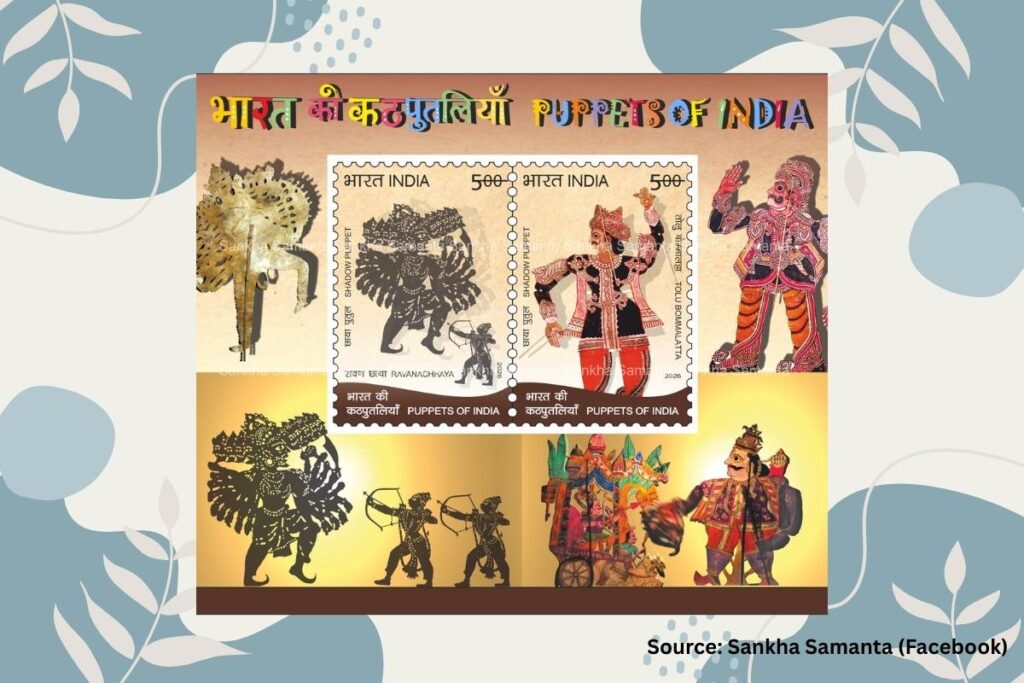
7. Ravanachhaya
Origin: Odisha
Type: Shadow Puppet
“Shadow of Ravana.”
Leather puppets without joints.
Primarily Ramayana episodes.
Collector’s insight: Rare and historically significant shadow tradition. High cultural value.
8. Tolu Bommalatta
Origin: Andhra Pradesh
Type: Shadow Puppet
Large coloured leather shadow puppets.
Epic storytelling tradition.
Collector’s insight: Complements Ravanachhaya, completing shadow puppet representation.
Visual Design & Philatelic Significance
The stamps visually represent:
- Vibrant costume detailing
- Traditional craftsmanship
- Regional identity
- Performance aesthetics
The issue aligns perfectly with the festival setting of Ishara, which is India’s leading international puppet theatre platform.
For thematic collectors, this issue fits into:
- Performing Arts
- Folk Traditions
- Indian Culture
- Mythology on Stamps
- UNESCO Intangible Heritage themes
Technical Data – Puppets of India 2026
The denomination of each stamp is ₹5.00 (500 paise).
Four Miniature Sheets were issued, each carrying two stamps, with a total denomination of ₹10.00 per miniature sheet. The total quantity printed for each Miniature Sheet is 1,11,000 copies.
Four Sheetlets were also released, each valued at ₹80.00. The total quantity printed for each Sheetlet is 1,11,000 copies.
The printing process used is Wet Offset.
The stamps were printed by Security Printing Press, Hyderabad.
Closing Notes
This issue is not just about cultural representation. It also marks something important for collectors.
After a long gap, India Post has issued a Miniature Sheet with this commemorative set. It is attractively designed, reasonably priced, and highly affordable. The response from the philatelic community has been immediate. One can clearly sense the excitement across collector groups, WhatsApp discussions, and strong ePost orders.
That momentum matters.
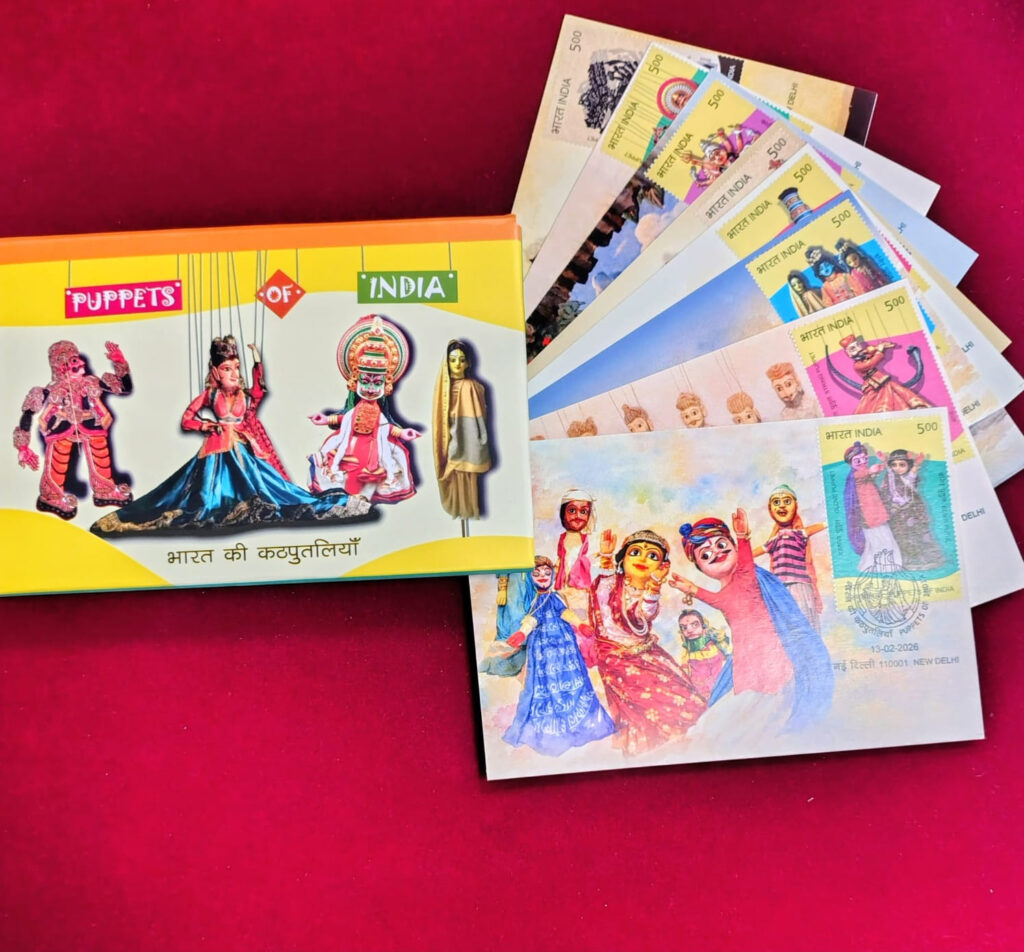
Alongside the stamps, a Set of Maximum Cards has also been released — again after a considerable period. For serious collectors, this adds depth. For thematic exhibitors, it opens multiple display possibilities. For modern postal historians, it strengthens documentation value.
This combination — stamps, miniature sheet, and maximum cards — makes the 2026 Puppets of India issue structurally complete.
Credit must also go to the designer, Shri Sankha Samanta, who once again demonstrates why he remains one of the most consistent and culturally sensitive designers in modern Indian philately. His ability to balance tradition with visual clarity continues to define contemporary Indian stamp design.
What do you think about the design, the miniature sheet, and the return of maximum cards?
Drop your thoughts below.
Which puppet form is your favourite — and have you secured your set yet?
Excellent release by India Post:)