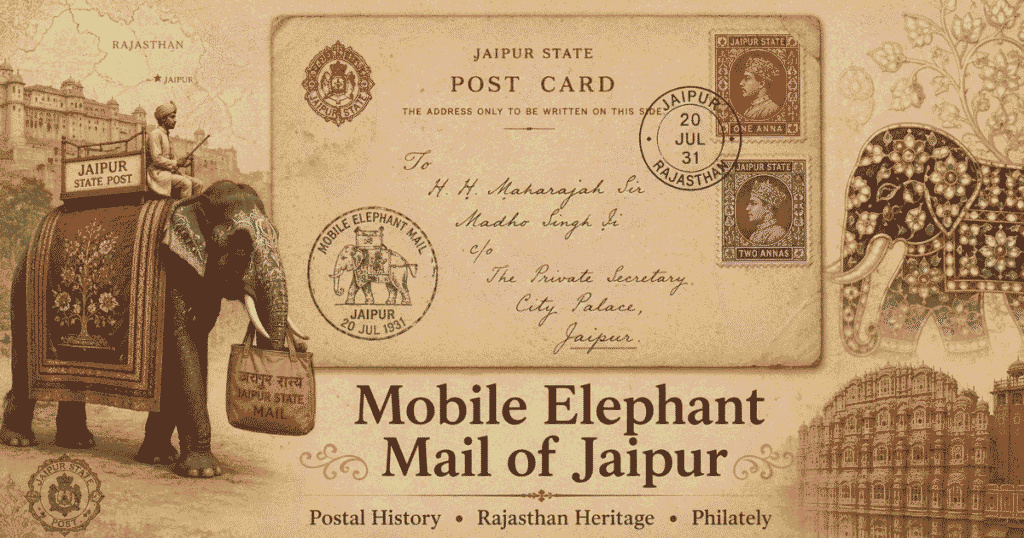
Recently, I acquired this beautiful postcard from a seller. At first glance, it appears to be an attractive philatelic souvenir from Jaipur, but a closer look reveals that it records an interesting modern postal experiment: Mobile Elephant Mail.
This postcard was issued by the SSP, Jaipur City Division, Station Road, Jaipur. It promotes the use of elephants for mail delivery by India Post during a special philatelic event. For collectors, such items are more than decorative souvenirs. They are small postal documents that preserve the memory of unusual and traditional methods of mail transportation.
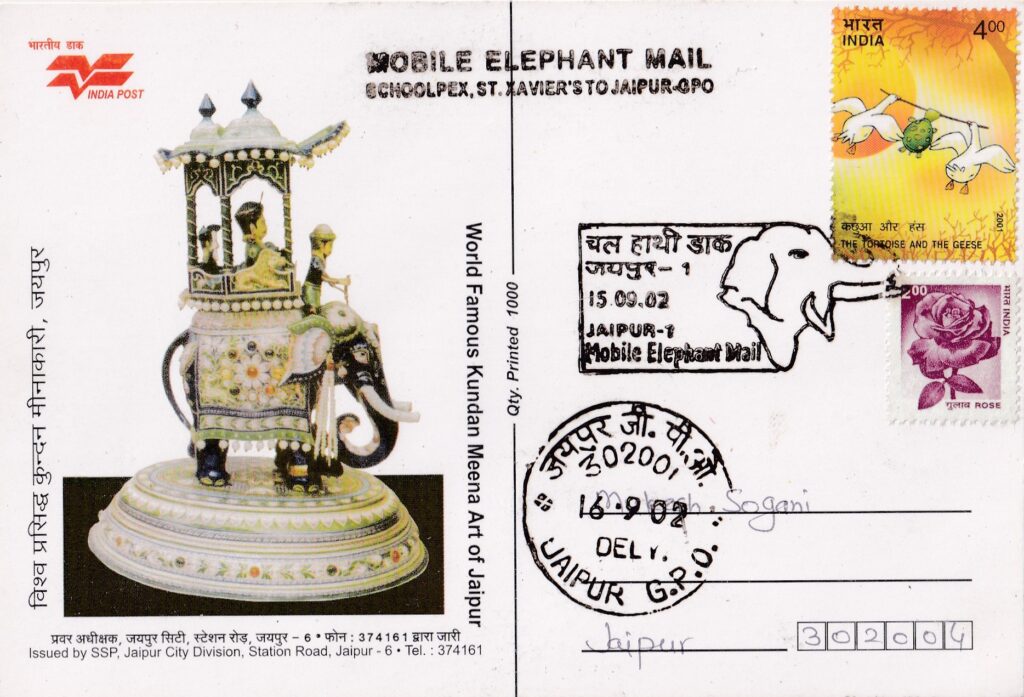
The postcard bears a pictorial cancellation dated 15 September 2002, Jaipur. The cancellation depicts an elephant, giving the card strong thematic appeal. It fits well into several collecting areas, including animal transport, postal history, Rajasthan, tourism, elephants, and special cancellations.
The franking on the postcard is also interesting. It carries Indian definitive and commemorative stamps, adding to its postally used character. The combination of stamps, special cancellation, and event-related postcard makes this item a fine example of modern Indian philately.
The postcard was sent from the venue of SCHOOLPEX 2002, held at St. Xavier’s, Jaipur, on 15 September 2002. It was delivered at Jaipur GPO the next day, on 16 September 2002. The postcard was carried as part of the Mobile Elephant Mail arrangement, making it a genuine event-carried postal item rather than merely a souvenir.
The left half of the postcard features the World Famous Kundan Meena Art of Jaipur, showing a decorative elephant motif. This connects the postal item directly with Jaipur’s artistic and cultural identity. Kundan Meena work is closely associated with Rajasthan’s rich craft tradition, and the elephant design further strengthens the regional theme of the postcard.
What makes this postcard special is not only its visual appeal, but also the story it tells. It reminds us that postal history is not limited to old covers, rare stamps, or colonial mail routes. Even modern event covers and postcards can document meaningful aspects of communication, culture, and public outreach.
Such carried postcards are valuable philatelic educators. They show how India Post used special events to highlight traditional transportation methods and local heritage. In this case, the postcard becomes a living witness to Rajasthan’s cultural identity through philately.