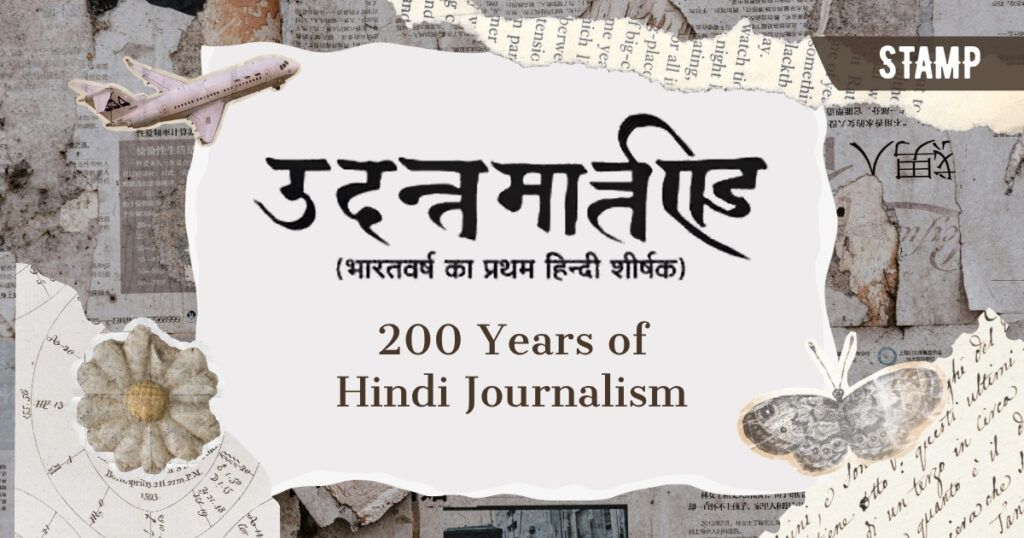
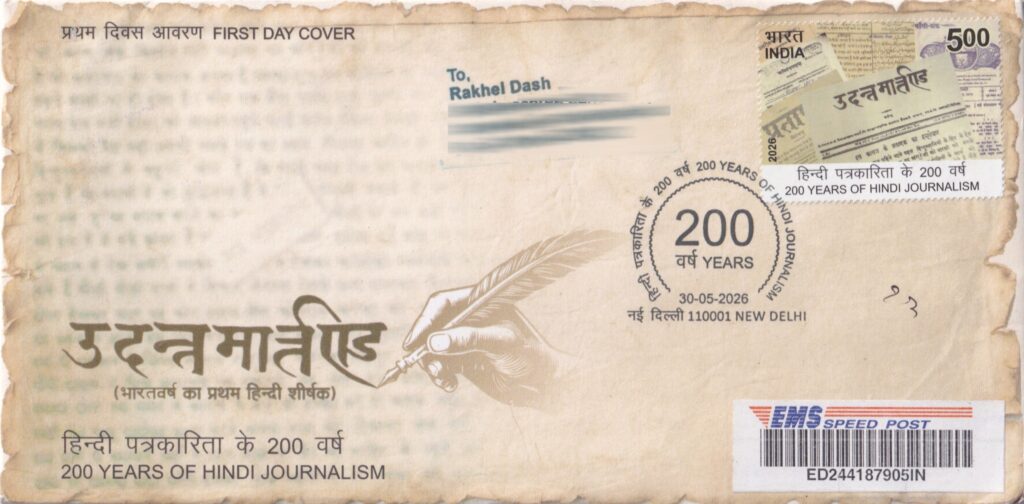
Recently, I received a beautiful First Day Cover of the commemorative stamp on 200 Years of Hindi Journalism.
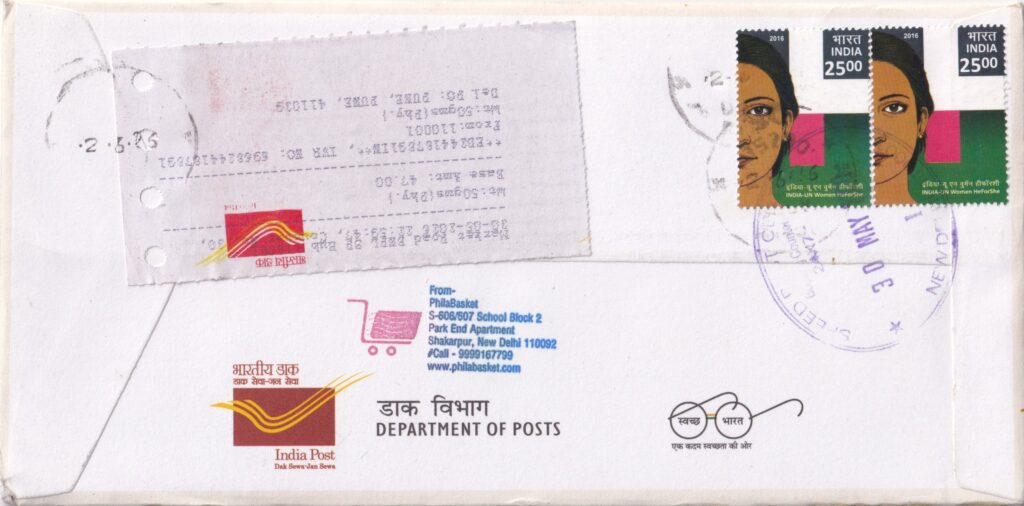
The stamp was released on 30 May 2026 and the cover shared in this post was sent by Speed Post from New Delhi on the first date of issue.
For a collector, this is always a satisfying detail.
A stamp is good.
A First Day Cover is better.
But a First Day Cover actually travelled through the post on the date of issue adds another layer of postal charm.
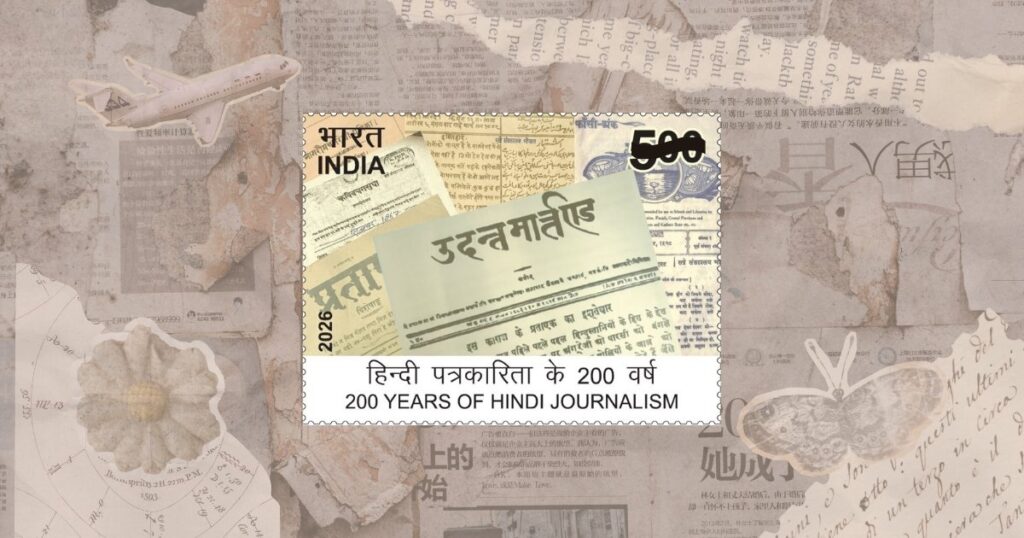
The stamp features the title “Udant Martand” in Devanagari script.
To be honest, I heard this name properly for the first time through this stamp.
The word looked interesting. It sounded old, literary, and important. So naturally, my curiosity took me to Google. After some reading, I found that this was not just the name of an old newspaper. It was the beginning point of Hindi journalism in India.
And the story is worth sharing.
What Was Udant Martand?
Udant Martand was the first Hindi newspaper of India.
It was first published on 30 May 1826 from Calcutta, now Kolkata.
The editor was Pandit Yugal Kishore Shukla, who is remembered as a pioneer of Hindi journalism.
The title itself is beautiful. “Udant” means news. “Martand” means sun. So, Udant Martand can be understood as “The Sun of News.”
That is a powerful name for a newspaper. It suggests light, awareness, and knowledge. It also shows the ambition behind the publication. This was not merely a paper printed for business. It was meant to serve Hindi-speaking people.
At that time, most newspapers were available in English, Persian, or Bengali. Hindi readers did not have enough access to news in their own language. Udant Martand tried to fill that gap.
That makes it historically important.
The Interesting Story
The most interesting part of the story is its connection with the postal system.
Udant Martand was printed in Calcutta. But many of its natural readers were in the Hindi-speaking regions of North India. That created a serious problem.
The newspaper was made for Hindi readers. But those readers were far away from the place of printing.
To reach them, the newspaper needed a proper postal distribution system. It also needed postal support or concession to keep the cost practical. Without that, sending copies to distant readers became expensive and difficult.
This is where the story becomes almost ironic.
A newspaper called “The Sun of News” wanted to spread light among Hindi readers. But it could not travel easily to those readers.
The paper struggled because of poor distribution, lack of official support, and limited public subscription. Finally, it stopped publication on 4 December 1827.
So, Udant Martand lived for less than two years.
But its importance did not end there.
It became the foundation stone of Hindi journalism.
Two hundred years ago, Udant Martand struggled partly because it could not use postal distribution effectively. Today, the Department of Posts has issued a commemorative stamp to honour it.
A Newspaper That Opened a Door
Udant Martand may not have survived for long. But it opened a door.
After it, Hindi journalism slowly grew in reach and influence. Over the next two centuries, Hindi newspapers and magazines helped shape public opinion, literature, language, and political awareness.
Many important names became part of this journey.
- Bharatendu Harishchandra gave strength to the Hindi renaissance.
- Acharya Mahavir Prasad Dwivedi helped standardize Hindi prose through Saraswati.
- Ganesh Shankar Vidyarthi’s Pratap became an important nationalist voice.
- Makhanlal Chaturvedi’s Karmveer added another strong chapter to Hindi journalism.
- The magazine Kalyan, edited by Bhaiji Hanuman Prasad Poddar, also became an important publication in Hindi reading culture.
All these later developments trace back to the first bold step taken by Udant Martand.
Collector’s Note
For collectors, this issue is attractive for several reasons.
It marks a bicentenary: 200 years of Hindi journalism.
It connects with the history of newspapers, Indian languages, printing, literature, and public communication.
It also has a direct postal angle because the story of Udant Martand itself involved distribution difficulties.
Closing Notes
This First Day Cover made me search for one unfamiliar word: Udant Martand.
That search opened a much larger story.
For me, this is what makes philately special. A small stamp can lead us to a forgotten chapter of history.
And sometimes, the story behind the stamp is even more interesting than the stamp itself.