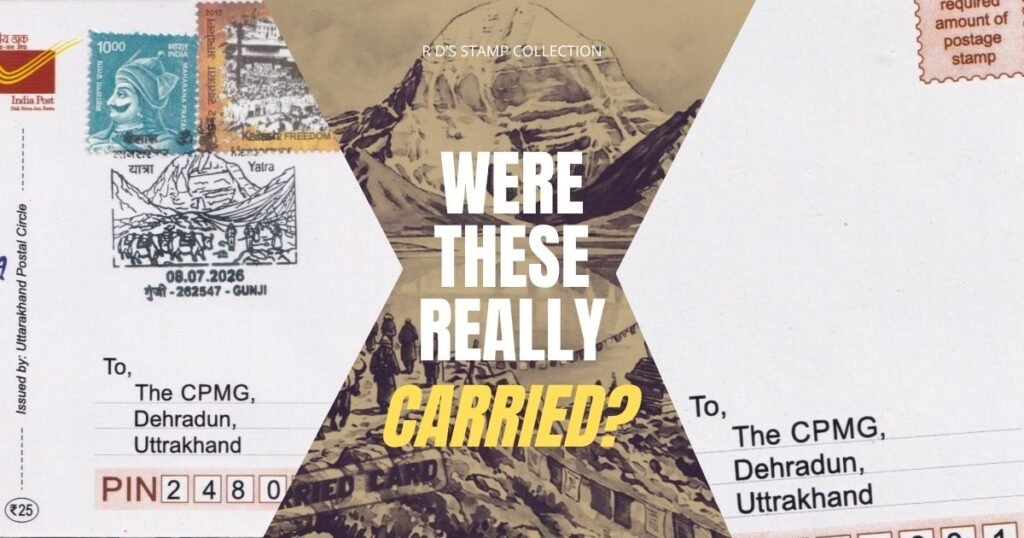
When a “Carried Card” Makes You Ask: Was It Really Carried?
As a collector of carried mail, I usually get excited when India Post releases something connected with an unusual route. The recent Kailash Mansarovar Yatra picture postcards from Uttarakhand Circle looked exactly like that kind of material.
I sent an eMO to the Derhadun GPO Philatelic Bureau for a few carried sets. I also ordered one blank set.
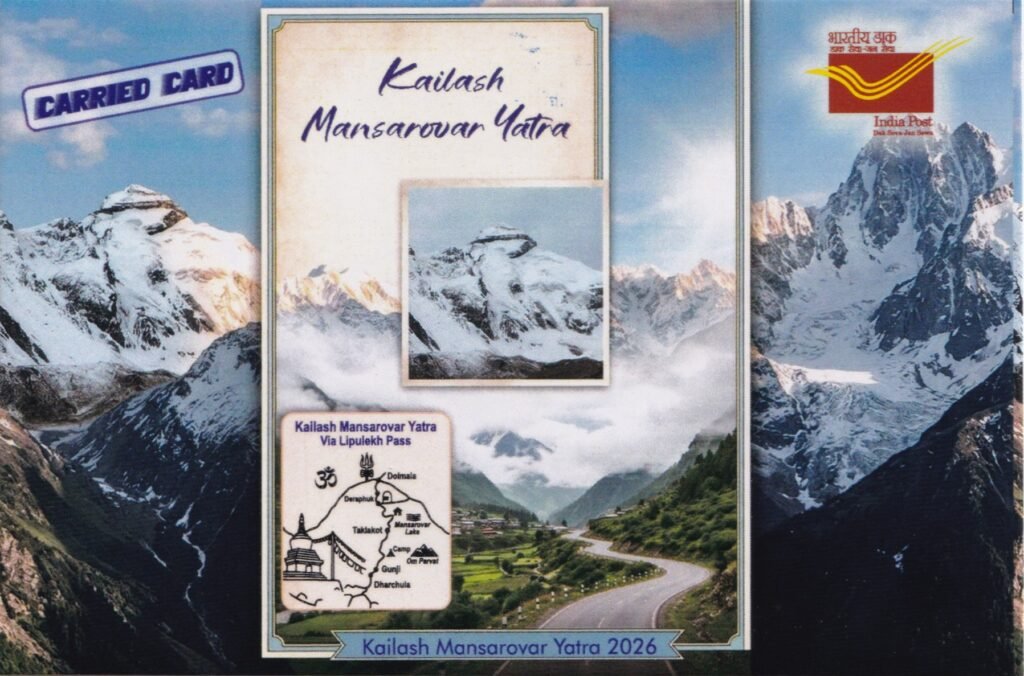
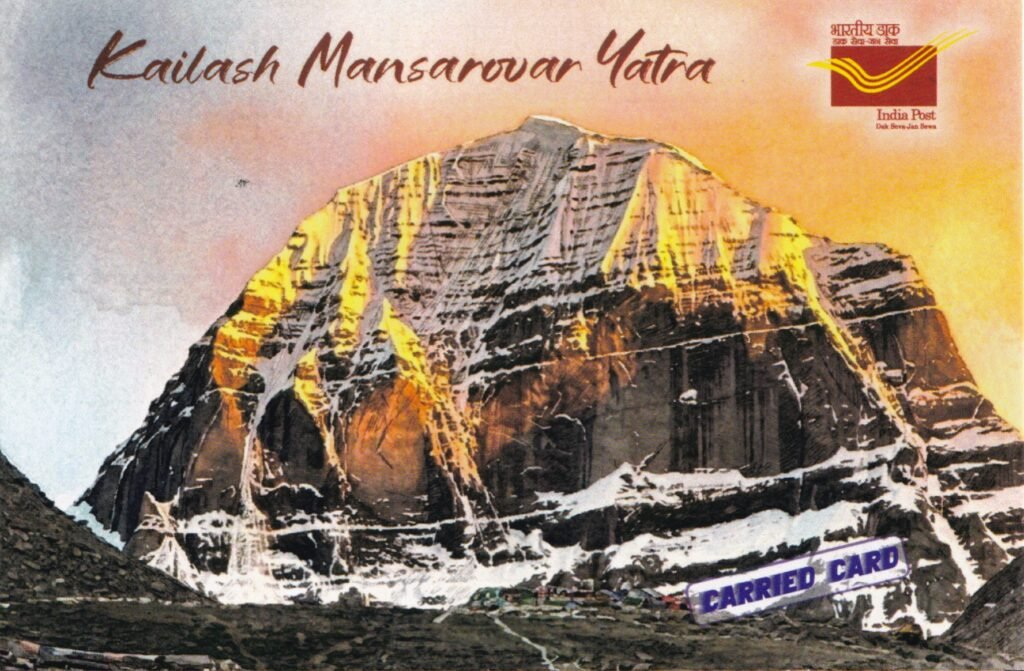
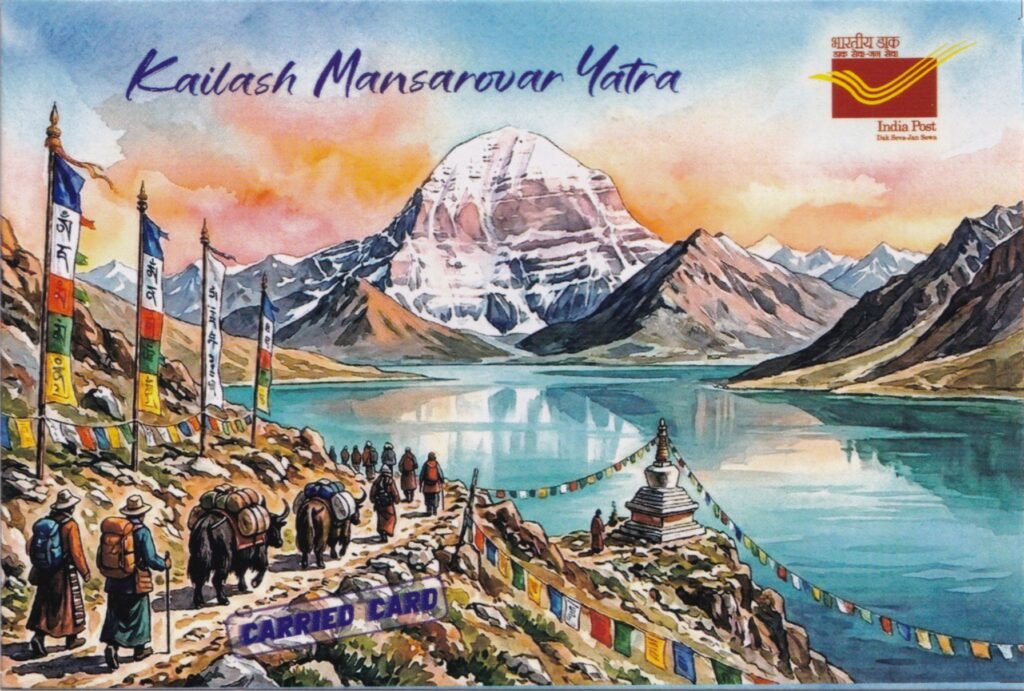
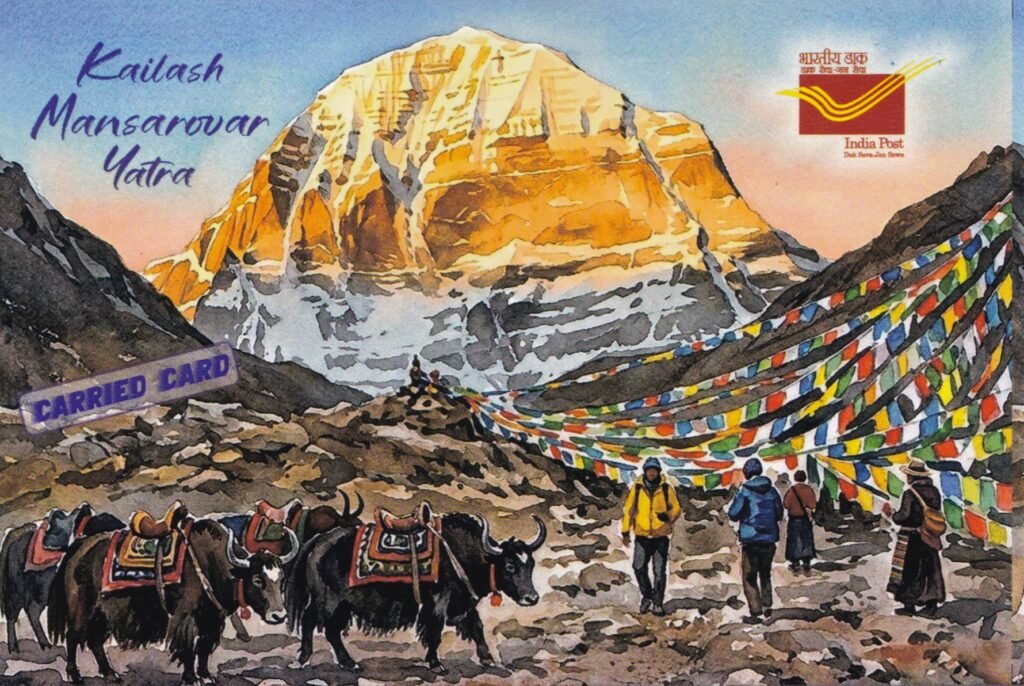
When the parcel arrived, my first impression was excellent. The five cards are genuinely beautiful. Each uses a different view of the pilgrimage: Mount Kailash, Lake Mansarovar, pilgrims, yaks, prayer flags and the Lipulekh route.
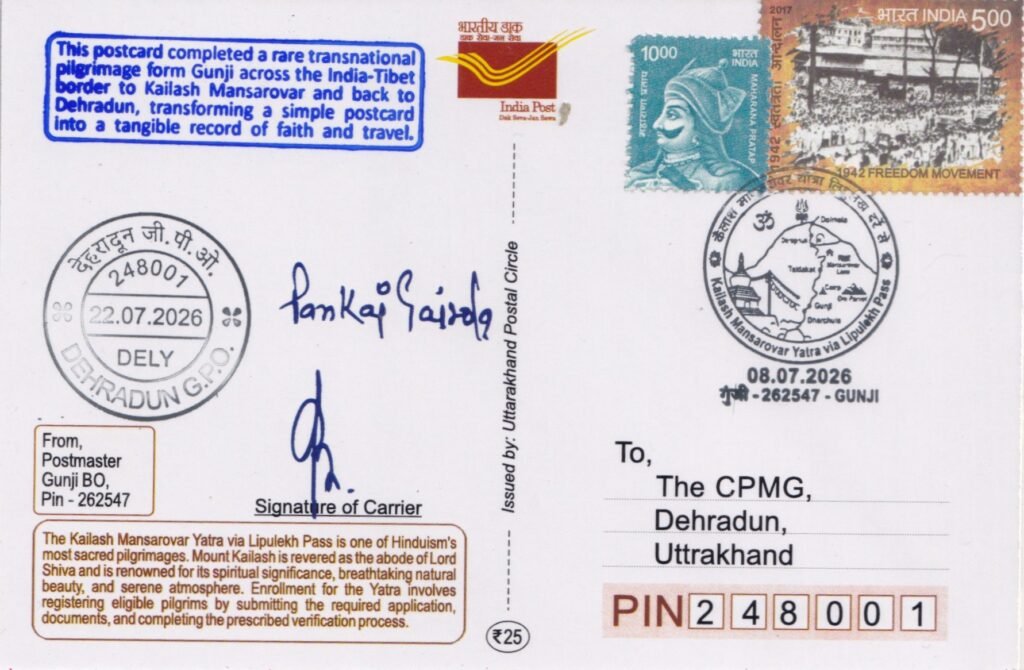
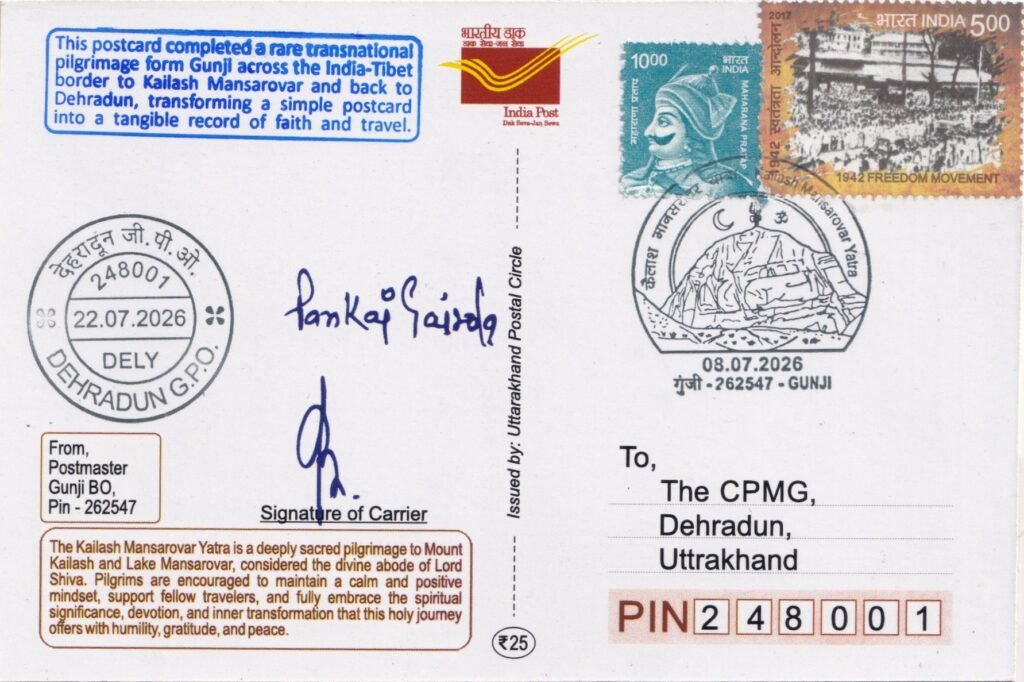
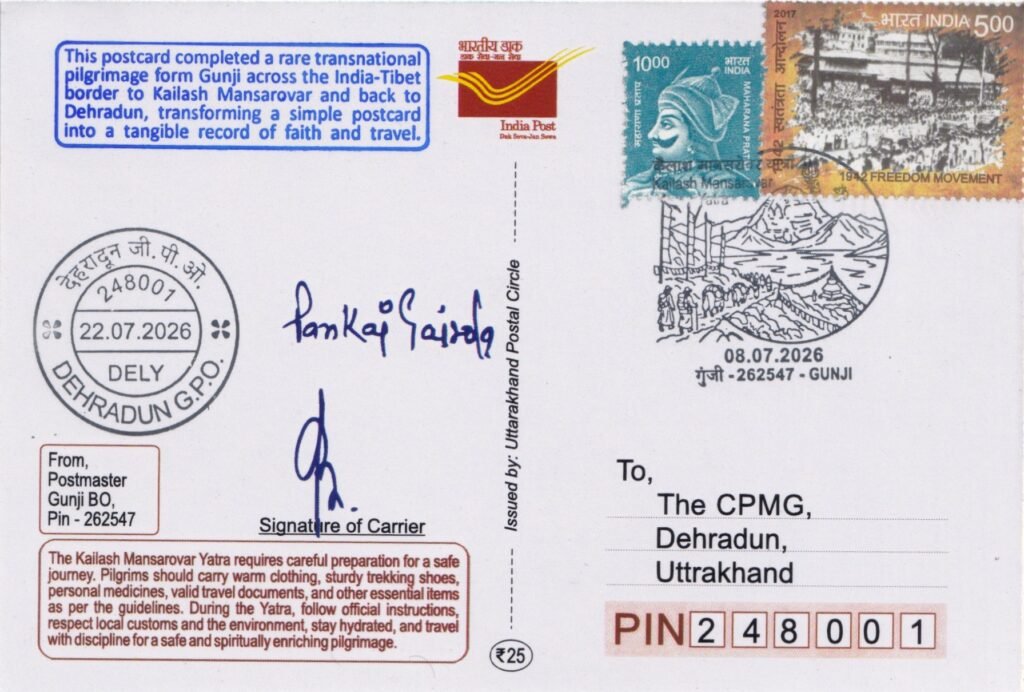
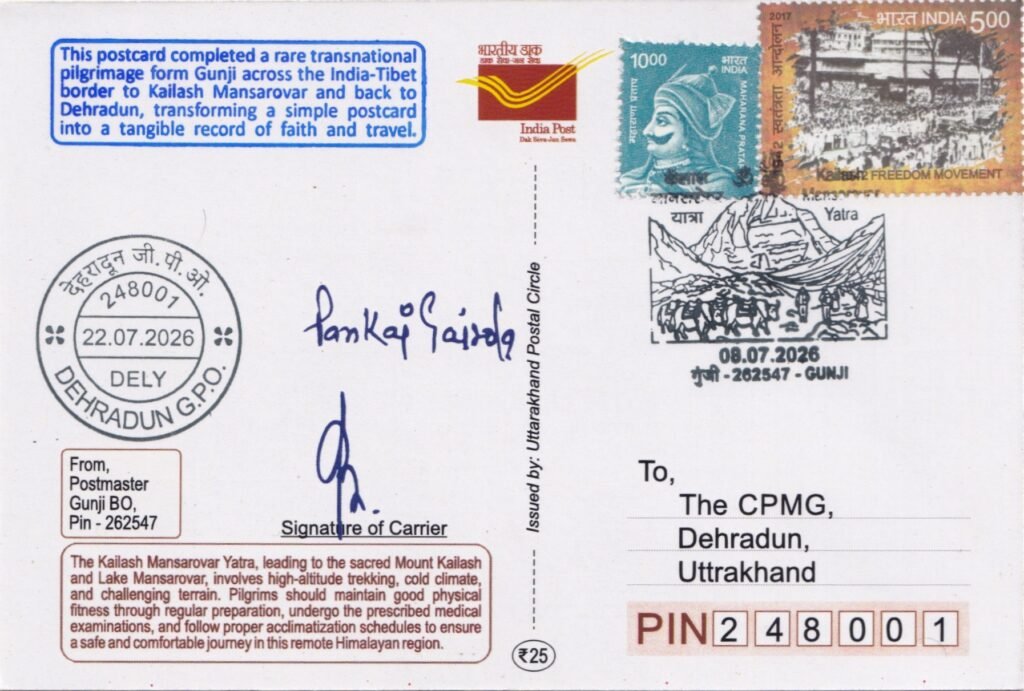
The postal side made the set even more interesting. The carried cards bear ₹15 postage through a ₹10 Maharana Pratap stamp and a ₹5 1942 Freedom Movement stamp. Each also has a different Gunji pictorial cancellation dated 08.07.2026. The cards are addressed to the CPMG, Dehradun, and carry a Dehradun GPO delivery postmark dated 22.07.2026.
There is a carrier’s sinature too. A bold blue marking states that the postcard completed a transnational pilgrimage from Gunji, across the India–Tibet border to Kailash Mansarovar, and back to Dehradun.
On paper, this is excellent carried-mail material.
Then I picked up the matching card from the “blank” set.
That was where the story changed.
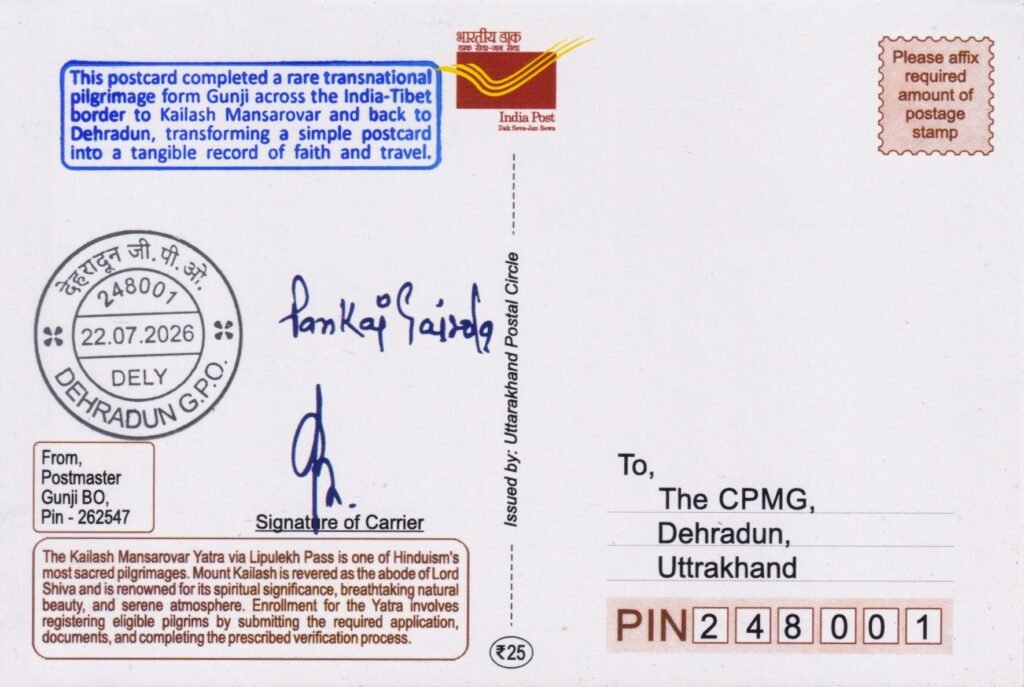
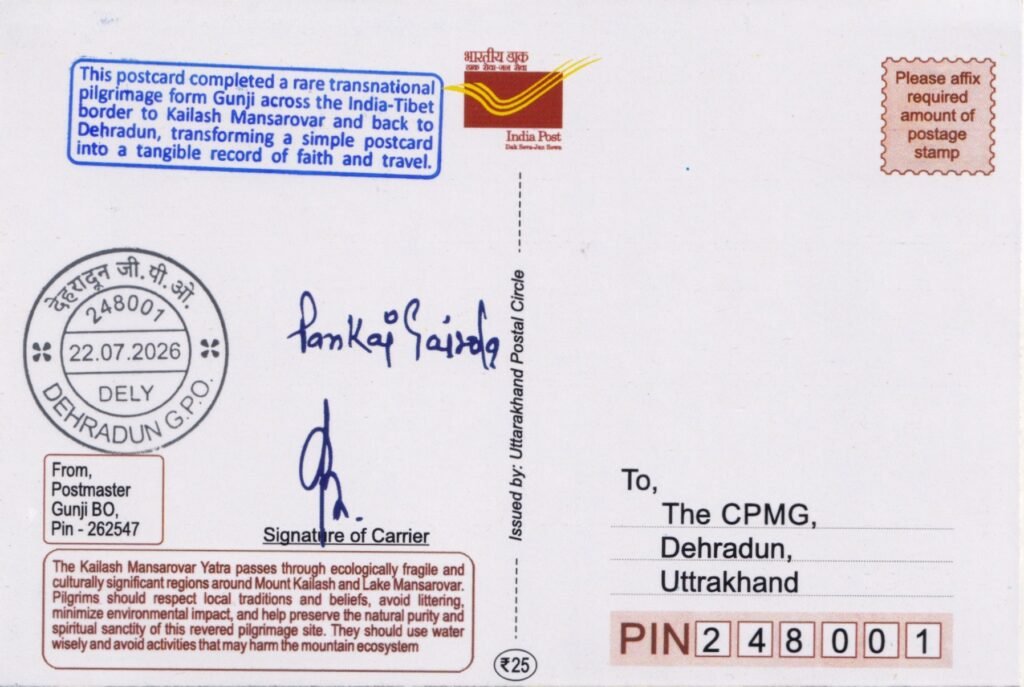
There were no postage stamps. There was no Gunji pictorial cancellation. Yet the card had the same blue journey statement. It had the carrier’s signature. Most importantly, it had the same Dehradun GPO delivery cancellation of 22.07.2026.
A supposedly blank postcard with a delivery postmark is difficult to ignore.
So I checked the next design.
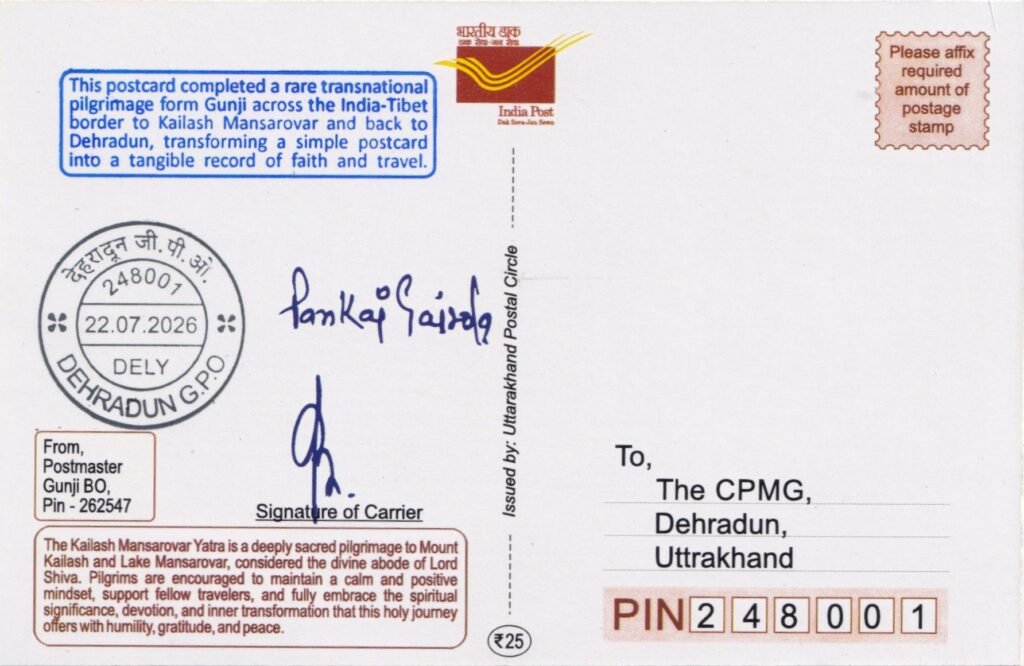
Same pattern.
Then the third.

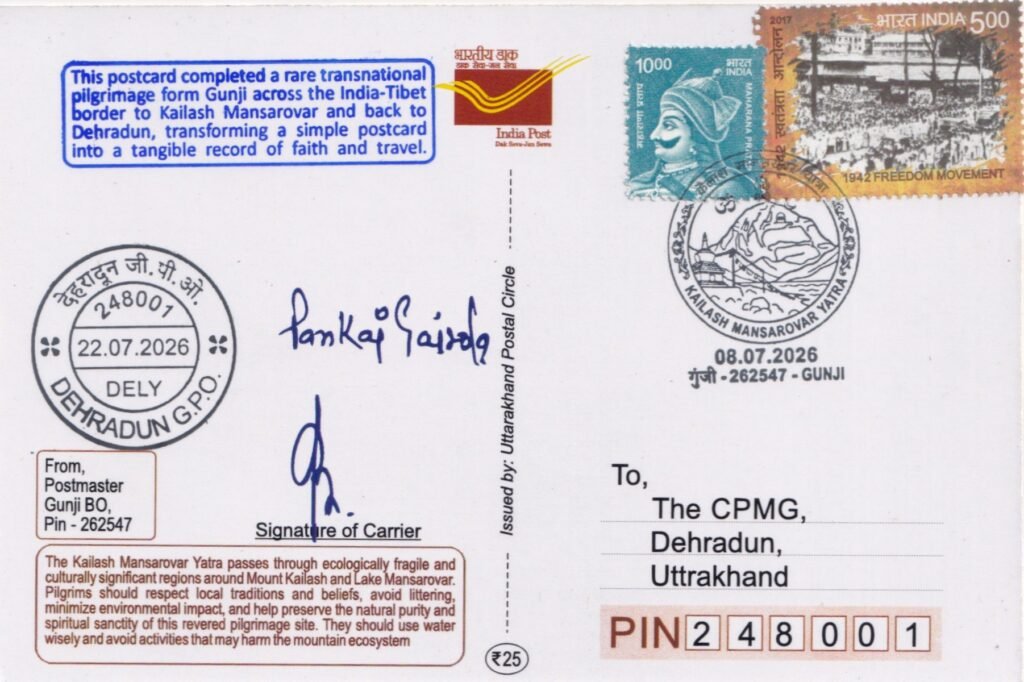
And the fourth.
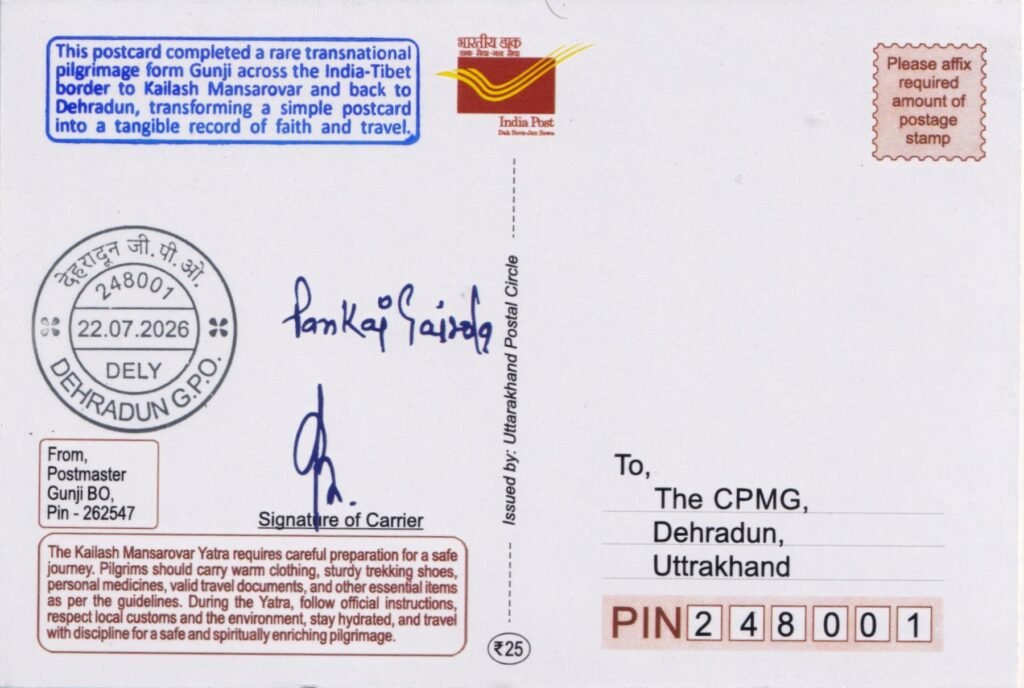
By now, one accidentally missed stamp was no longer a convincing explanation. All five cards in the blank set showed the same basic anomaly.
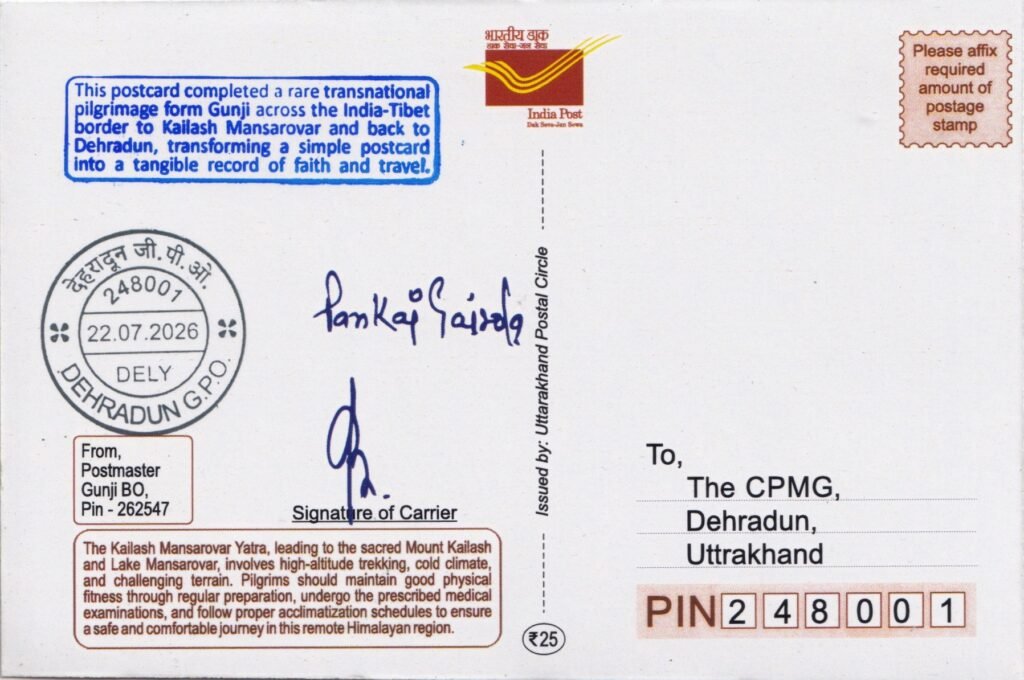
Apparently, the only thing “blank” about this set was the stamp space.
This creates a serious philatelic question.
A delivery cancellation gets its importance because it records a postal event. If the same delivery strike appears on cards that show no evidence of having been prepaid or posted, what exactly does that strike prove?
India Post’s current mail-operations instructions say that prepayment of postage is mandatory except for specified services. Its published tariff also lists ₹15 for an international airmail postcard to most foreign countries.
But ₹15 on the carried cards does not, by itself, prove foreign postal transmission.
The destination written on these cards is Dehradun, India.
That distinction matters.
Do these blank cards prove that the entire issue was fabricated in an office?
No. That would go beyond the evidence.
The cards might genuinely have travelled with pilgrims as a bundle. The markings might have been applied administratively before or after the journey. And a physically carried card does not necessarily have to enter the Chinese postal system. So the absence of a Tibetan or Chinese postmark alone cannot prove that the journey never happened.
But the blank set proves something narrower, and still important.
The blue journey statement, carrier’s signature and Dehradun delivery strike cannot be treated as independent proof of the journey. The same markings exist on unstamped cards.
At minimum, that weakens their evidentiary value as postal history.
If these cards genuinely crossed an international border, collectors deserve stronger documentation. A dated carriage certificate, official handover record, list of cards carried, border or pilgrimage-authority endorsement, or another independently verifiable record would make the claim far more convincing.
Without that, we are largely being asked to believe the story because the postcard itself says so.
That is not enough for me.
Carried mail is becoming popular. Popularity creates demand. Demand creates FOMO. And FOMO is exactly when collectors stop asking the most basic question:
What actually proves the carriage?
A beautiful postcard is still a beautiful postcard. A limited issue can still be collectible. But neither an attractive design nor an official-looking handstamp automatically creates postal history.
I will keep this set because, ironically, the blank cards make it far more interesting to study. But I would be very cautious about paying a heavy premium simply because such material is advertised as “carried”.
Enjoy the artwork. Collect the story.
But before paying for the journey, ask for evidence of the journey.
In philately, a good story adds interest. Proof adds value.
What do you think? Would you accept these as genuine carried mail? If you own this set, check your cards and share what markings you received.