Can a picture postcard travel within India with just 50 paise postage?
Many postcard collectors have wondered about this. Older postal rules mention a separate ₹6 rate for printed communication. But do those rules still apply?
To understand the matter, I filed an RTI application with the Department of Posts. The documents received reveal an important change in India’s postcard regulations.
Why I Filed the RTI
My RTI application, POSTS/R/E/26/17161/1, was submitted on 19 September 2026.
I requested existing rules, circulars and clarifications concerning privately manufactured picture postcards.
The question was specific. What postage applies to a picture postcard featuring a photograph or illustration on one side and a handwritten message and address on the other?
The Philately Division initially stated that postage matters fell under Postal Operations.
Under the same application, I subsequently received documents from Rahul Bharti, SO (PO) and CPIO, Department of Posts, New Delhi.
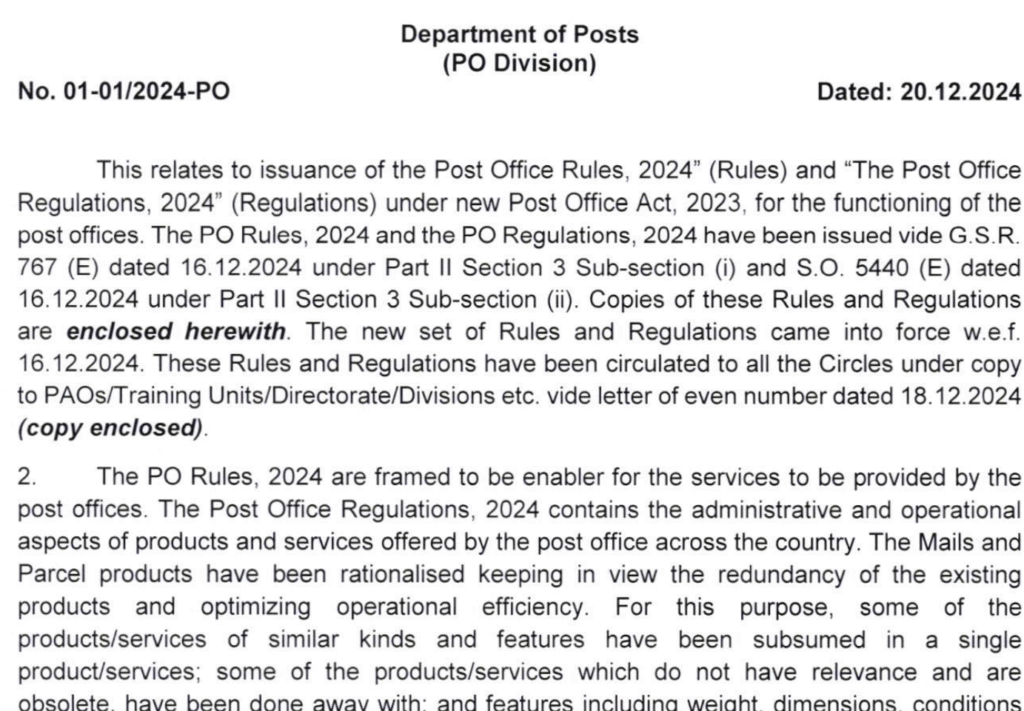
These included the Indian Post Office Rules, 1933, the Post Office Regulations, 2024, and a departmental communication concerning the rationalisation of postal services.
The Old Postcard Rates: 50 Paise and ₹6
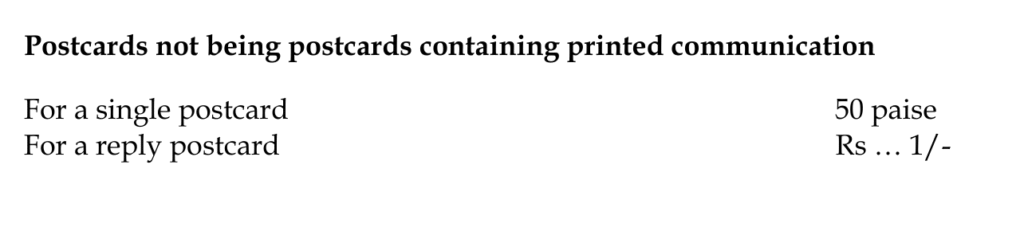
The Indian Post Office Rules, 1933, prescribed different postage rates for ordinary postcards and postcards containing printed communication.
Under Rule 1, the rates were:
Ordinary inland postcard: 50 paise.
Postcard containing printed communication: ₹6.

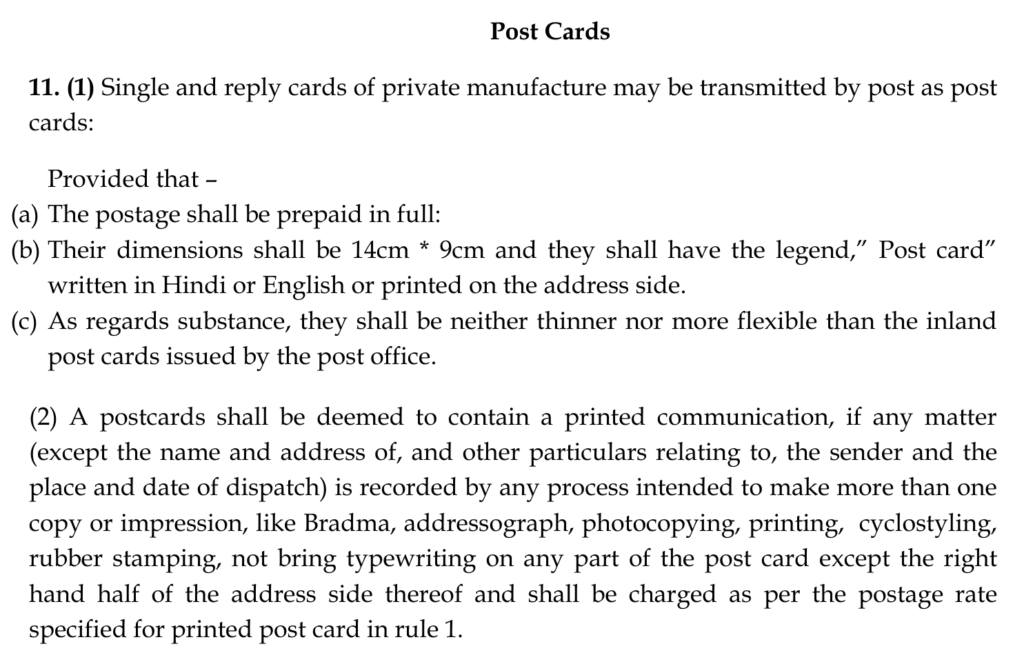
Rule 11(1) also permitted privately manufactured postcards, subject to prescribed conditions.
However, Rule 11(2) classified certain mechanically reproduced material as printed communication.
These provisions are historically important. However, they must not be mistaken for the current regulations.
The Major Change on 16 December 2024
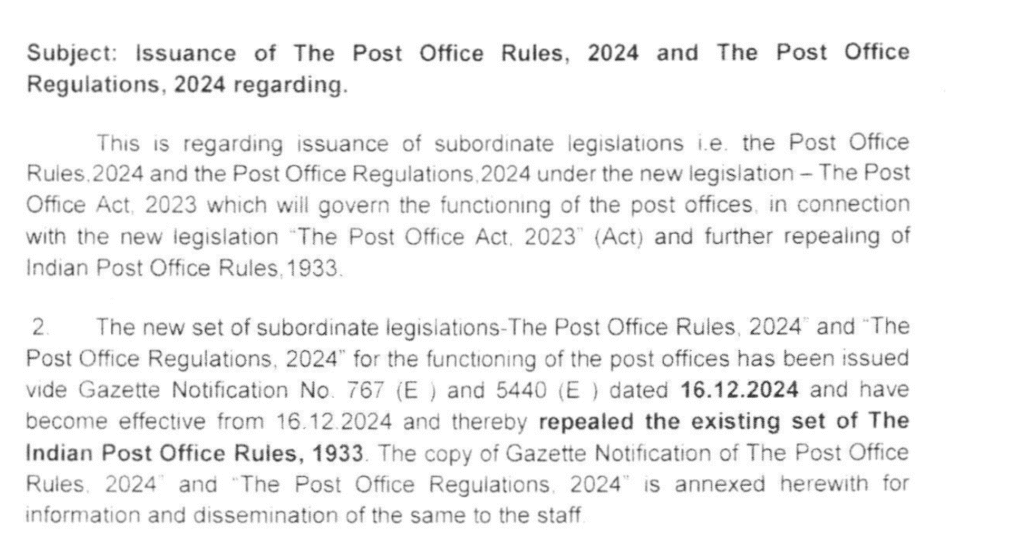
The Post Office Rules, 2024, and Post Office Regulations, 2024, came into force on 16 December 2024.
They replaced the earlier regulatory framework, including the Indian Post Office Rules, 1933.
A departmental circular dated 18 December 2024 confirms this change.
More importantly, the annexure to the departmental communication dated 20 December 2024 explains how postal products were rationalised.
It identifies four earlier postcard categories:
- Ordinary postcards.
- Postcards containing printed communication.
- Competition postcards.
- Meghdoot postcards.
All four were merged into a single product named Post Cards.
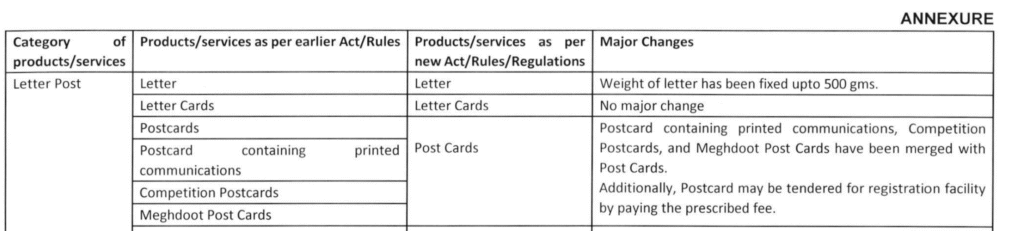
This is the central finding of the RTI.
The earlier ₹6 printed-communication postcard category no longer appears as a separate domestic postcard service.
What Is the Current Postcard Rate?
The answer appears in the Post Office Regulations, 2024.
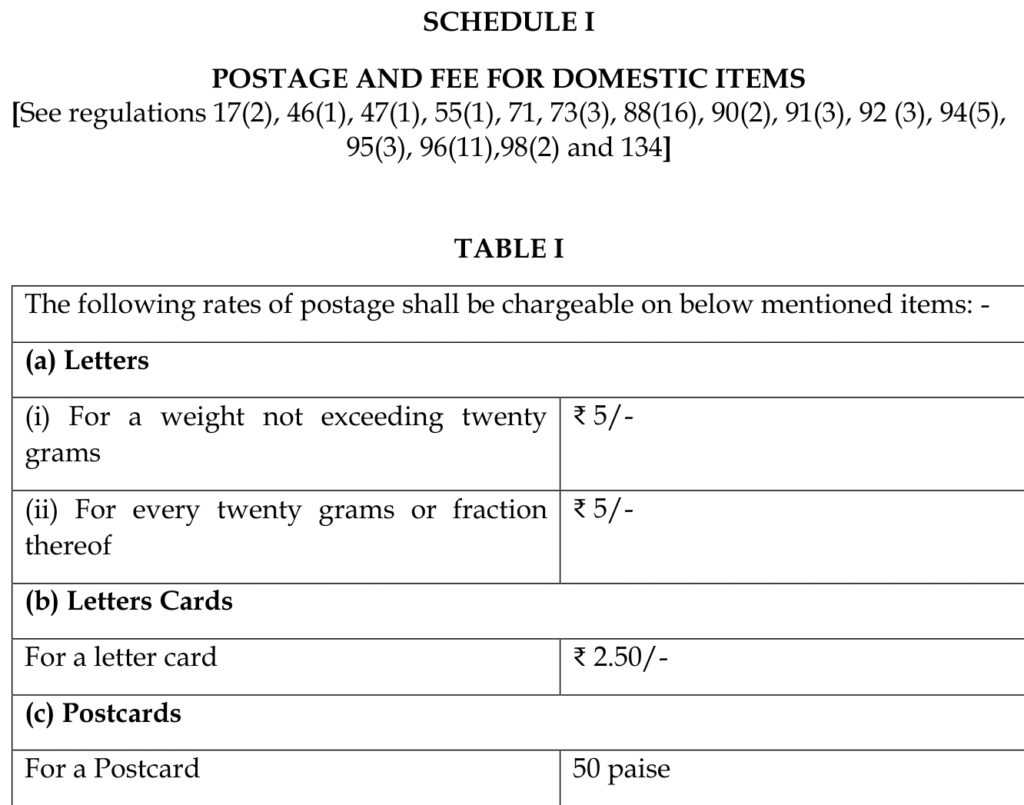
Schedule I, Table I, prescribes the postage for domestic postal articles.
Under the heading Postcards, the rate is:
For a Postcard: 50 paise.
No separate domestic rate is listed for postcards containing printed communication.
India Post’s online domestic tariff page also lists 50 paise as the postcard rate, as checked on 18 November 2026.
Therefore, the published domestic postcard tariff is clear.
However, a postcard must satisfy the applicable conditions to qualify for that rate.
What Conditions Must a Postcard Meet?
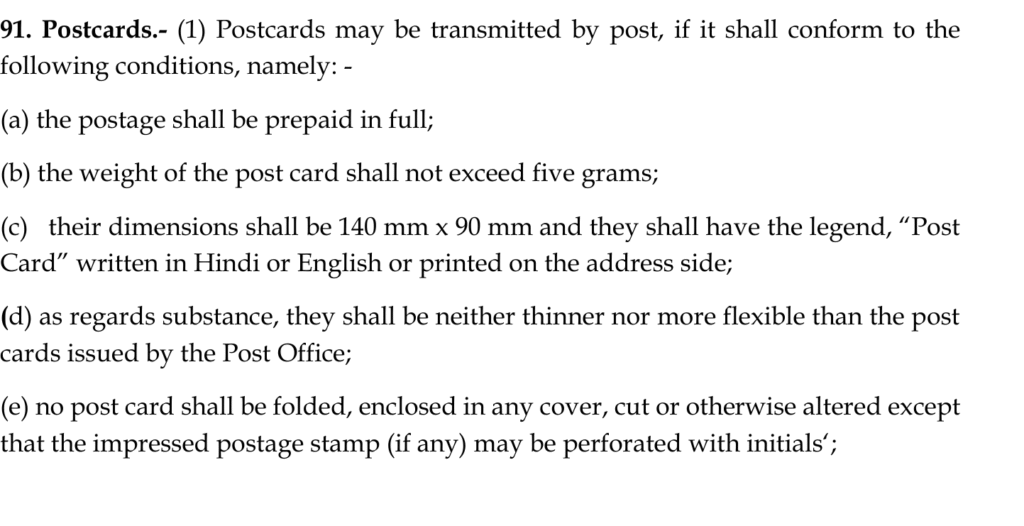
Regulation 91 of the Post Office Regulations, 2024, specifies the conditions for domestic postcards.
The principal requirements are:
- Postage must be fully prepaid.
- Maximum weight is 5 grams.
- Dimensions must be 140 × 90 mm.
- The address side must carry the words Post Card in Hindi or English.
- The card must not be thinner or more flexible than an India Post postcard.
- The card must not be folded or enclosed in a cover.
Are Printed Images Permitted?
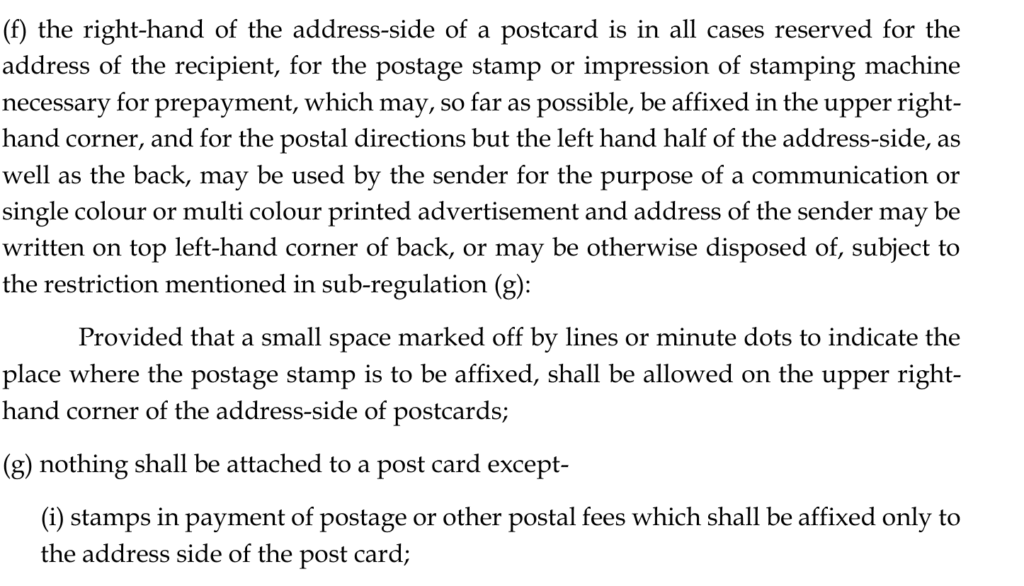
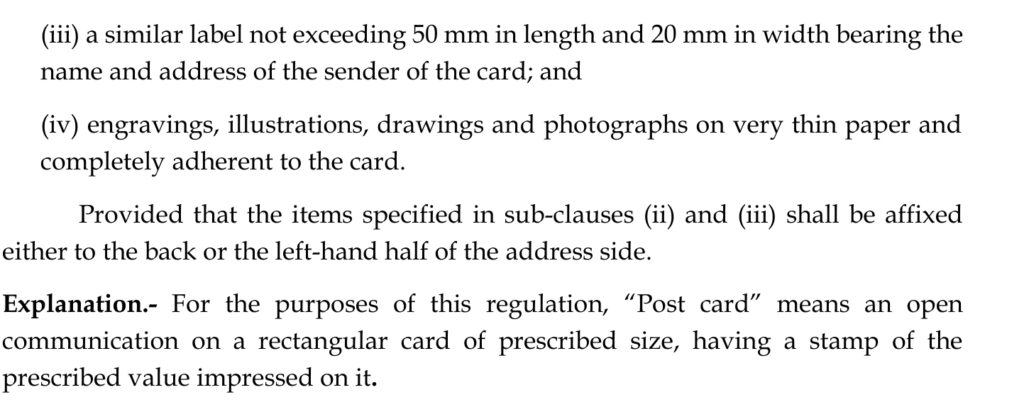
Regulation 91(1)(f) allows communication or single-colour or multicolour printed advertisements in the permitted areas of a postcard.
Regulation 91(1)(g) also permits adhesive postage stamps and certain illustrations, drawings and photographs attached to the postcard.
Real Examples: Picture Postcards Sent with 50-Paise Postage
Official regulations are one thing. But are picture postcards actually being delivered with just 50-paise postage?
Interestingly, several collectors have already tested this.
A recent discussion in the Reddit community r/PostcardIndia provides some useful examples.
Picture Postcards Received Across India
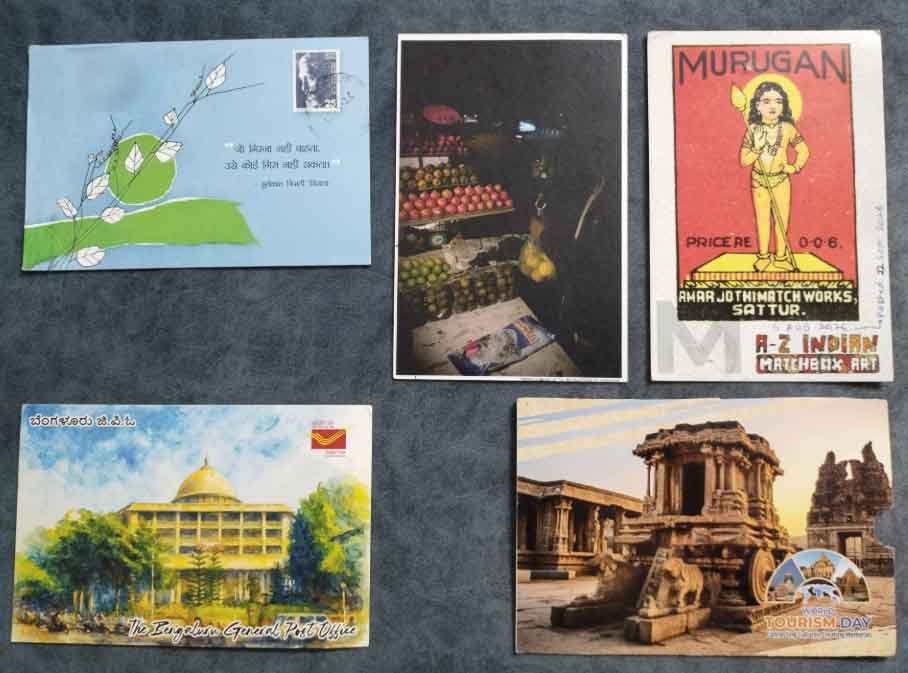
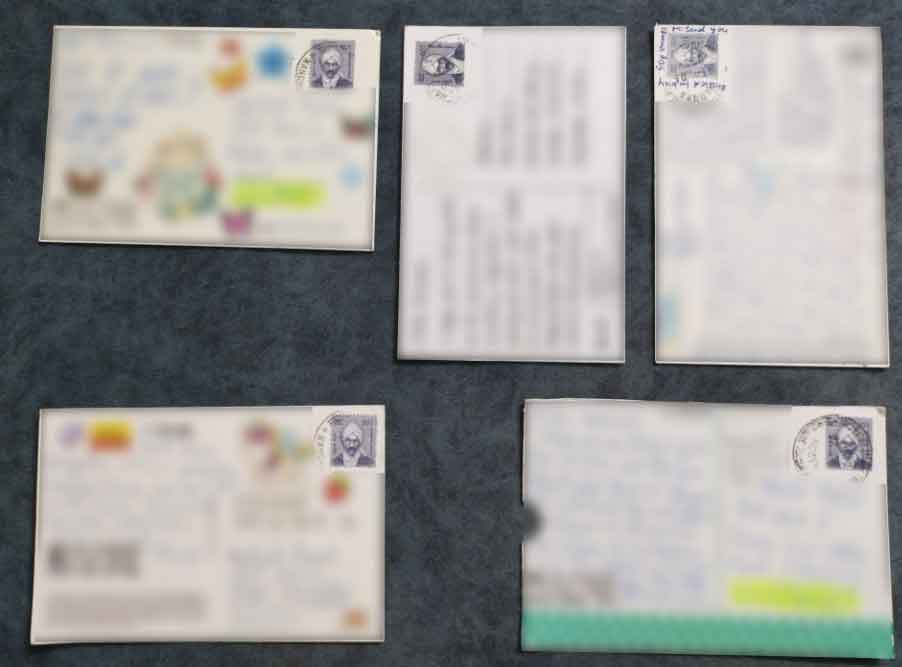
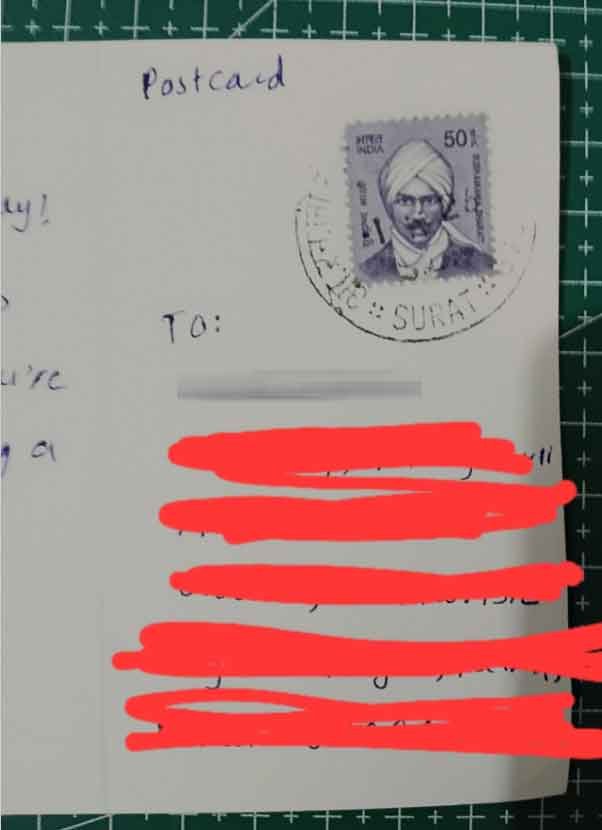
Reddit user u/EmployerSpare9921 shared photographs of picture postcards received with 50-paise stamps.
The collector also reported sending commercially printed, handmade and franked postcards to different Indian states using the same postage.
According to the discussion, some collectors began testing the 50-paise rate in February and March 2026. Their postcards reportedly reached their destinations.
More Examples from Fellow Collectors
Another user, u/Beginning_Newt4611, described receiving a commercially printed picture postcard with 50-paise postage. The card featured a printed picture on one side, with space for the address and personal message on the other.
Similarly, u/Calm_Channel_4431 shared photographs of several postcards reportedly received with 50-paise stamps.
What These Examples Tell Us
These experiences support the practical use of 50-paise postage for domestic picture postcards.
However, successful postal transmission does not, by itself, establish the applicable legal rate.
The stronger evidence remains the Post Office Regulations, 2024, and the official departmental circular confirming the merger of postcard categories.
Together, the regulations and collectors’ experiences provide a useful reference for those sending picture postcards within India.
What Does This Mean for Philatelists?
The RTI documents establish two important facts.
First, the separate category for postcards containing printed communication was merged into the general postcard category in December 2024.
Second, the published domestic postcard postage rate is 50 paise.
These findings provide strong documentary support for applying the ordinary postcard rate to qualifying picture postcards.
Collectors should therefore ensure compliance with Regulation 91.
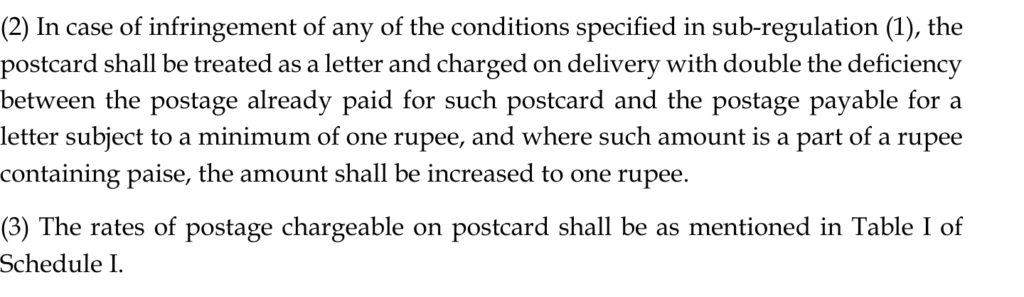
An article that fails to satisfy the prescribed conditions may be treated as a letter, with additional postage collected under Regulation 91(2).
Closing Note
This RTI exercise has helped clarify a long-standing question among Indian postcard collectors.
The documents confirm that the separate category for postcards containing printed communication was merged into the general postcard category on 16 December 2024. The current published domestic postcard postage rate is 50 paise.
The experiences shared by fellow collectors on Reddit provide additional practical evidence. Several privately printed picture postcards have reportedly travelled successfully through India Post with 50-paise postage.
I hope these official documents and examples serve as a useful reference for fellow philatelists, postcard enthusiasts and Postcrossing members.
Have you sent or received a picture postcard with 50-paise postage? Share your experience in the comments, preferably with photographs of the postal markings.
Your contributions can help build a better understanding of postcard postage practices across India.